
The palletizer
QUICK START checklist.
Stacking cases by hand is the job nobody wants and the first one your line loses to turnover. It’s also the easiest place to start with automation, if you know what to plan for.
This checklist covers the 7 things worth figuring out before you automate end-of-line stacking, from case specs to where the full pallet goes next.
- Simple, practical, no automation background needed
- Print it, fill it in, keep it for reference
- Nothing to sign up for
Get the free checklist
Download the checklist
Tell us where to send it. The download starts the moment you submit.
Loading the form…
The form didn't load. Talk with an expert and we'll send it over.
Your checklist is on its way.
The download should start automatically, and we’ve emailed you a copy. If it didn’t start:
Download the checklistWe’ll only use your details to send the checklist and the occasional automation insight. Unsubscribe anytime. See our Privacy Policy.
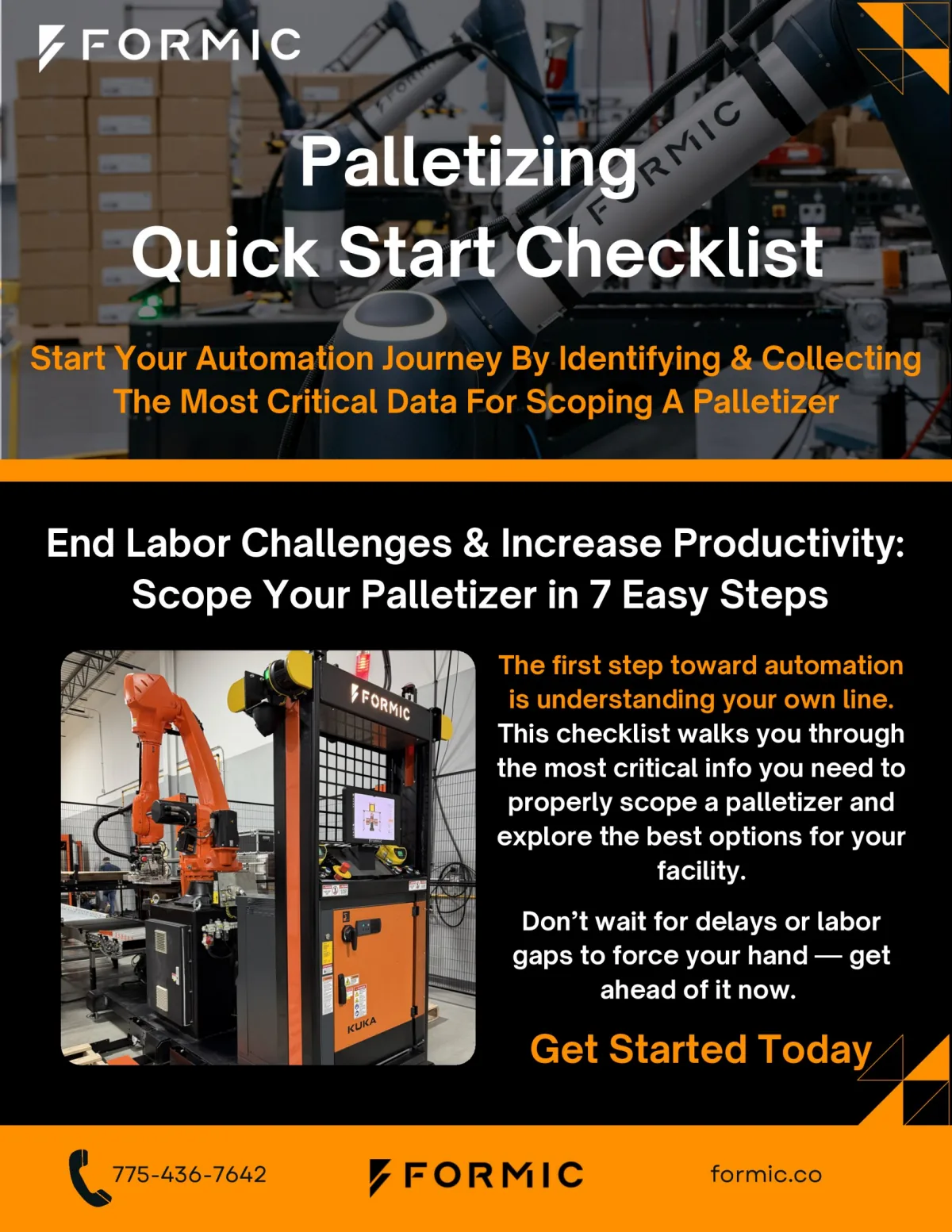
Scope your palletizer in 7 easy steps.
Taken straight from the Formic Solution Engineer’s tool kit. Answer what you can. Anything you skip, an engineer can help you fill in.
- 01Your case: dimensions, weight, and whether you run boxes, bags, trays, or pails.
- 02Your throughput: cases per minute at average and at peak, and how many shifts you run.
- 03Your pallet pattern: pallet size, cases per layer, layers per pallet, and slip sheets.
Plus four more: your infeed, footprint, environment, and what happens downstream.
No CapEx. No risk. No problems.
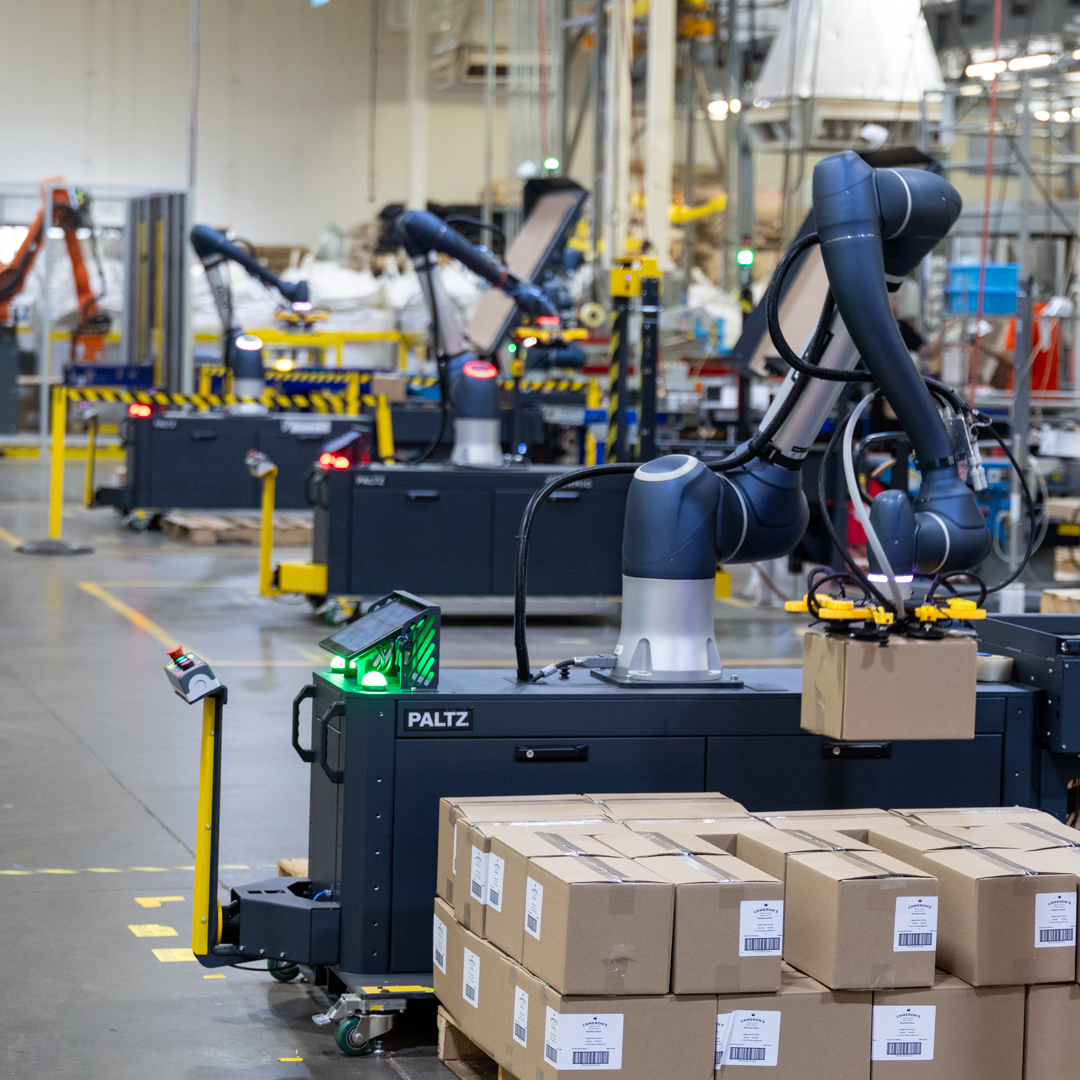
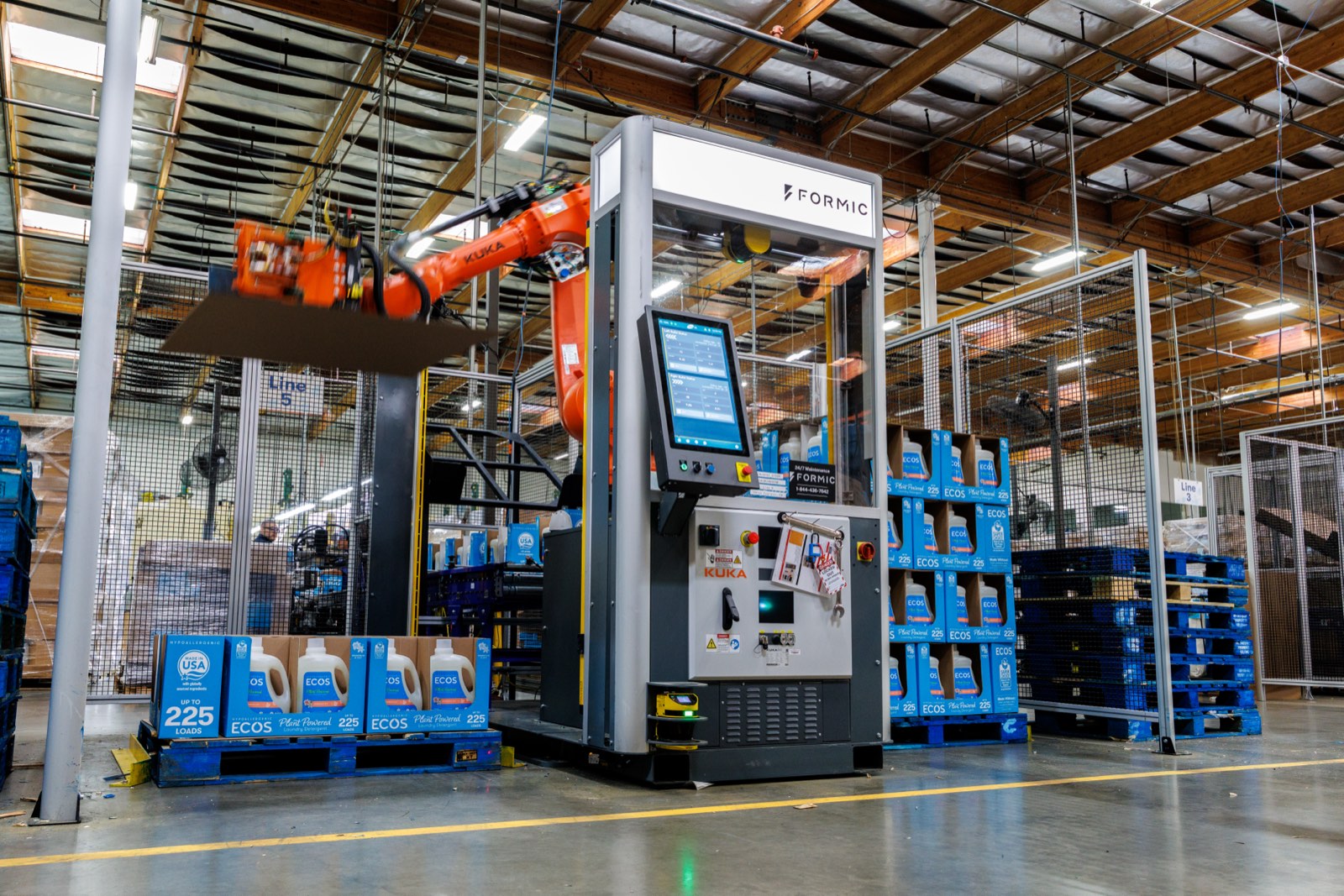
Formic Full Service Automation covers the whole palletizing cell for one fixed monthly rate, designed around the line you already run.
No CapEx
No large investment, upfront payment, or long-term commitment. Pay as you go for unlimited month-to-month use of the palletizing cell.
No risk
As your production needs change, your equipment changes with you, while your fixed monthly price stays the same.
No problems
24/7 on-call tech support and 100% maintenance coverage, both preventative and corrective, all for one fixed rate.

Questions, answered.
Do I have to talk to sales to get the checklist?
No. Fill out the form and the download starts immediately. We’ll also email you a copy. No call required.
Why does Formic need this information?
These are the exact inputs an engineer asks for to scope a palletizer: case dimensions and weight, throughput, pallet pattern, infeed height, floor space, and where the full pallet goes next. Gathering them up front turns a discovery call into a head start.
What if I don’t know an answer yet?
Fill in what you can. A partial checklist is still useful, and your engineer can help fill the gaps. The more you complete, the faster the quote.
Cobot or industrial palletizer, which do I need?
Throughput and case weight usually decide it. Cobot cells suit lower rates and tighter footprints; industrial cells handle heavier cases and faster lines. The checklist captures both numbers, so the recommendation follows from your own data rather than a guess.
What does a palletizing cell cost?
There’s no CapEx and no separate maintenance contract. You pay one flat monthly rate. The exact rate depends on your cases, rates, and pallet patterns, which is what this checklist captures.
How fast can we be running?
Typically weeks, not months. After a short scoping conversation we return a spec, lead time, and monthly rate, then build and commission the cell around the line you already run.
Stop stacking by hand.
Start scoping the cell.
Download the checklist, fill it in, and let an engineer come back with a scoped cell and a monthly rate built around your line.