From Wishlist to 50% of Lines: How No CapEx Automation Made It Click for Maintex
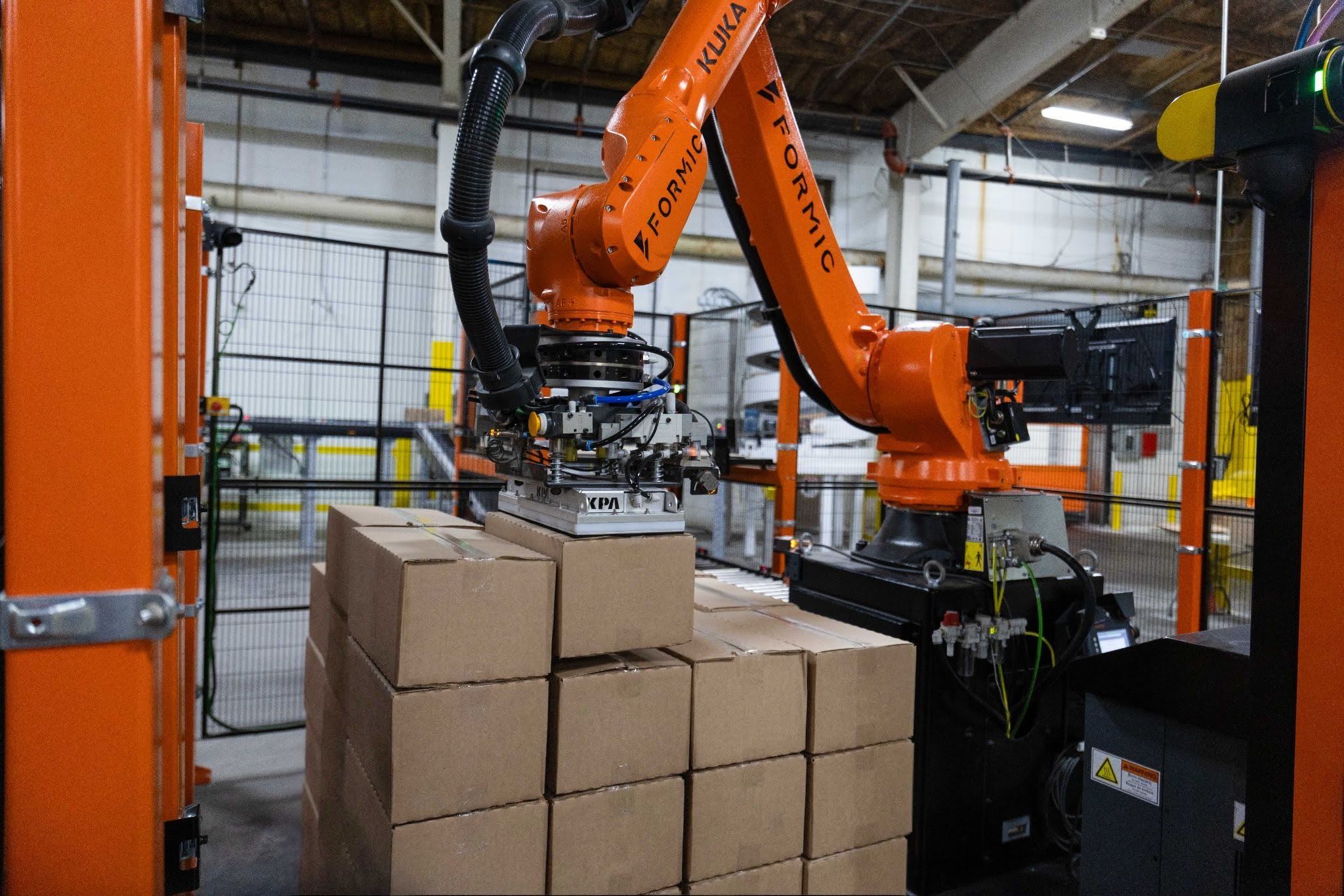
On a production line, people can only move so fast. That limit gets tighter when lines are short-staffed and the work is heavy, like lifting and stacking boxes all day.
At California-based Maintex, every plan ran at the speed of people. As VP of Operations and master scheduler, Jose Guerrero builds the schedule and owns whether it happens. When the person palletizing at the end of a line called out, the line slowed or stopped, and customer commitments were at risk.
"The reality is we're constrained to the velocity of humans and what we can do," Jose said.
Maintex makes everything from disinfectants to floor cleaner to lotion. For years, automation sat on Jose's wishlist because it was too expensive for a company its size. When he found a way to start at the end of the line without upfront capital, the win he cared about most wasn't cost savings. It was capacity.
"If we're saving a few bucks, it doesn't add operational value," Jose said. "What adds operational value is increasing capacity."
When the Schedule Depends on Who Shows Up
Around COVID-19, the labor gap at Maintex widened, and it never really closed. The hardest roles to fill were the ones that were strenuous and repetitive, and those were the ones with the most call-outs. Jose has done that work himself, so he understood why.
The problem was that the plan couldn't flex around it. "The plan relies on human beings to perform the task at a certain rate," Jose said. When the people weren't there, neither was the rate.
"The schedule was falling apart because we didn't have the staff to actually run the lines," he added.
Missed orders meant broken promises to customers, and at Maintex, that didn’t play. "One of our cornerstones is being committed and delivering what we promised," Jose said.
After a few years of inconsistent staffing, it came to a head last year. "It was becoming very, very frustrating," he said. Automation moved off the wishlist and onto the priority list.
Automation Without the Price Tag of Two Lines
A decade ago, Jose looked at traditional automation and found systems priced out of reach for a company of Maintex's size. A single piece of equipment cost about as much as two full production lines.
"This one piece of equipment is almost like two of our entire lines," he said. "Part of my job is to protect the company and the assets."
So automation stayed on the wishlist, and Maintex added smaller equipment piecemeal instead.
That changed at PACK EXPO last year, where Jose saw Formic's systems running live in the booth. He followed this up by visiting another Formic customer to watch a palletizer work on a real production floor. He also learned that Formic's Full Service Automation model required no capital upfront.
"When you don't have that upfront cost, it's more exciting," he said. "I can get started immediately and continue to learn.”
For a team without in-house robotics expertise, that mattered. It was Maintex's first robotic deployment, and a year later, two palletizers run at the end of its lines.
Service Is Key: “A Warm Call, Not a Quote”
Formic wasn't the only automation provider Maintex considered. Beyond the no-capital model, what set Formic apart was the sales experience.
"They just have constant follow-up," Jose said. "It doesn't feel like a cold call. It feels more like a warm call."
Instead of opening with a price, Formic opened with his problem. "Here's what we think you're struggling with; here's what we think is going to help you," Jose recalled.
Other vendors led with a number. "You see this huge number, and it gets very discouraging," he said. Working with Formic, "it feels more like a partnership, and that someone's there that wants to help you."
That support mattered when it came time to get the boss’s approval. Jose knew the operational value, but translating it into savings for leadership was harder. Working with Dany, Formic's sales manager, and Mallory, his customer success manager, he got help doing exactly that.
"I need to break it down for my boss," Jose said. "They've helped me, explaining things like, 'Here's where you can see the savings.'"
Why Start at the End of Line
For a first-time automator without in-house robotics expertise, palletizing was the simplest place to start. It was also one of the hardest jobs on the floor.
"It's one of the most difficult parts of the line because they're heavy boxes," Jose said. "It's more prone to get injured. And having done it myself, it's a very boring job."
At Maintex, boxes weigh up to 40 pounds. With one person palletizing per shift across two shifts, the line stopped every time that person took a break. Breaks alone could cost each line about a shift's worth of production every week.
Now, the robot holds the end of the line. "If we want to run the line eight hours, it will run eight hours," Jose said.
And he no longer builds a schedule wondering whether someone will show up to palletize.
"It's not part of my risk factor anymore," he said.
Employees Reallocated, Not Replaced
"Eventually I'll be replaced with AI, which I'm looking forward to because I'm trying to retire,” Jose joked.
Unsurprisingly, Maintex employees had some hesitations about the robots coming in. Team members wanted to know how many more robots were coming and what they would do.
Jose's answer was that jobs requiring human dexterity would stay with people, and the heavy, repetitive work would go to the robots.
"That person is just being reallocated to something more productive," he said.
The former palletizer is now a runner who supports every line and the rest of the team. "The person's still here, they're just being more supportive and helping productivity," Jose said.
The robots also took on the part of the job that carried the most risk. "It removes that safety risk because now I don't have someone lifting boxes all day long," he said. "And it improves our quality because it's stacking boxes the same way every time."
From the beginning, Jose saw automation as a collaborative effort on the floor. It was brought in to work with the people they had on the line, and for the people to support the system.
Capacity Maintex Can Plan Around
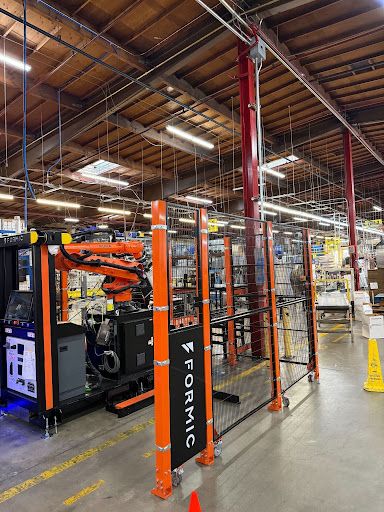
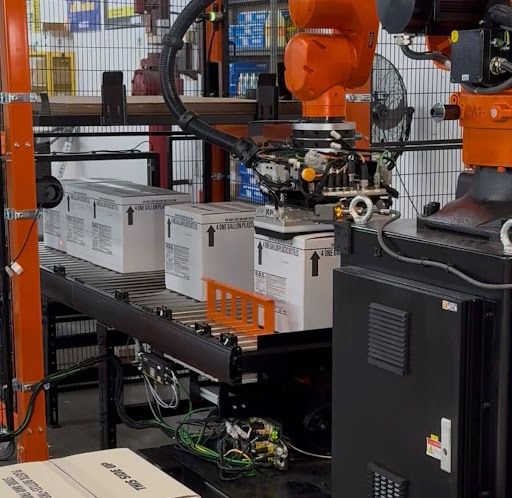
Maintex's first palletizer went live on its gallon line in April. The second followed on Line 3 in September. Each was installed in two days and fully deployed in under a week.
The difference showed up in the schedule. "We can run that line for 12 hours straight, and the robot will do its job. All we have to do is just shuffle our team members," Jose said.
The results:
- 2 robotic palletizers, now covering 50% of Maintex's 4 main lines
- Each deployed in under a week
- Line crew reduced from 5 people to 3
- A dedicated runner supporting multiple lines
- Lines running up to 12 hours straight
- No more hand-lifting boxes up to 40 pounds
- Smaller projected crew sizes for future growth
- Zero upfront capital
Jose added that automation has helped Maintex live up to its cornerstones of delivering what they promise: "Our customers are happier because if they want to order more, we have it."
It's also a win for the business, with more cases per labor hour. "Our financial friends like to see that, because I like to see things running," Jose said.
What’s Next
With two lines automated, Jose is already looking upstream. Case packing is the next bottleneck he wants to solve.
When asked whether he'd recommend Formic’s Full Service Automation to a peer facing the same problems, Jose didn't hesitate. "Oh yeah, 100%," he said.
He added that what really helped solidify his confidence in automation was seeing it up close at another Formic customer facility. Now, he expects to be that site for the next manufacturer.
"Somebody's going to say, 'Jose, someone wants to come here and see the robot, can they go see it?'" he said. "I'll say, 'Sure.'"
Book your free automation on-site assessment here.