Innovation in Their DNA: Marquis Automates Palletizing to Drive Efficiency and Support Employee Well-Being
Sitting on 3,800 acres of land at its Industrial Complex in central Illinois, Marquis has been innovating since its founding in 1975. What started as a family grain-hauling business has grown into a multi-generational enterprise with nine businesses operating on the campus, 450 employees, and an annual production of 395 million gallons of low-carbon, renewable ethanol.
The company’s operations extend beyond fuel: they also produce high-protein animal feed, USP ethanol for pharmaceuticals, cleaning, coatings, and personal care products, and bottled ethanol products for consumer goods, shipping to South America, Europe, Asia, and across the United States.
It’s apparent that innovation is in Marquis’s DNA. This year, the company opened its first power generation plant and is working on a carbon capture and sequestration facility, which will sequester more than 1,000,000 metric tons of carbon annually. With large orders from Fortune 500 companies and continuous growth across their many businesses, there is no room for stagnation.
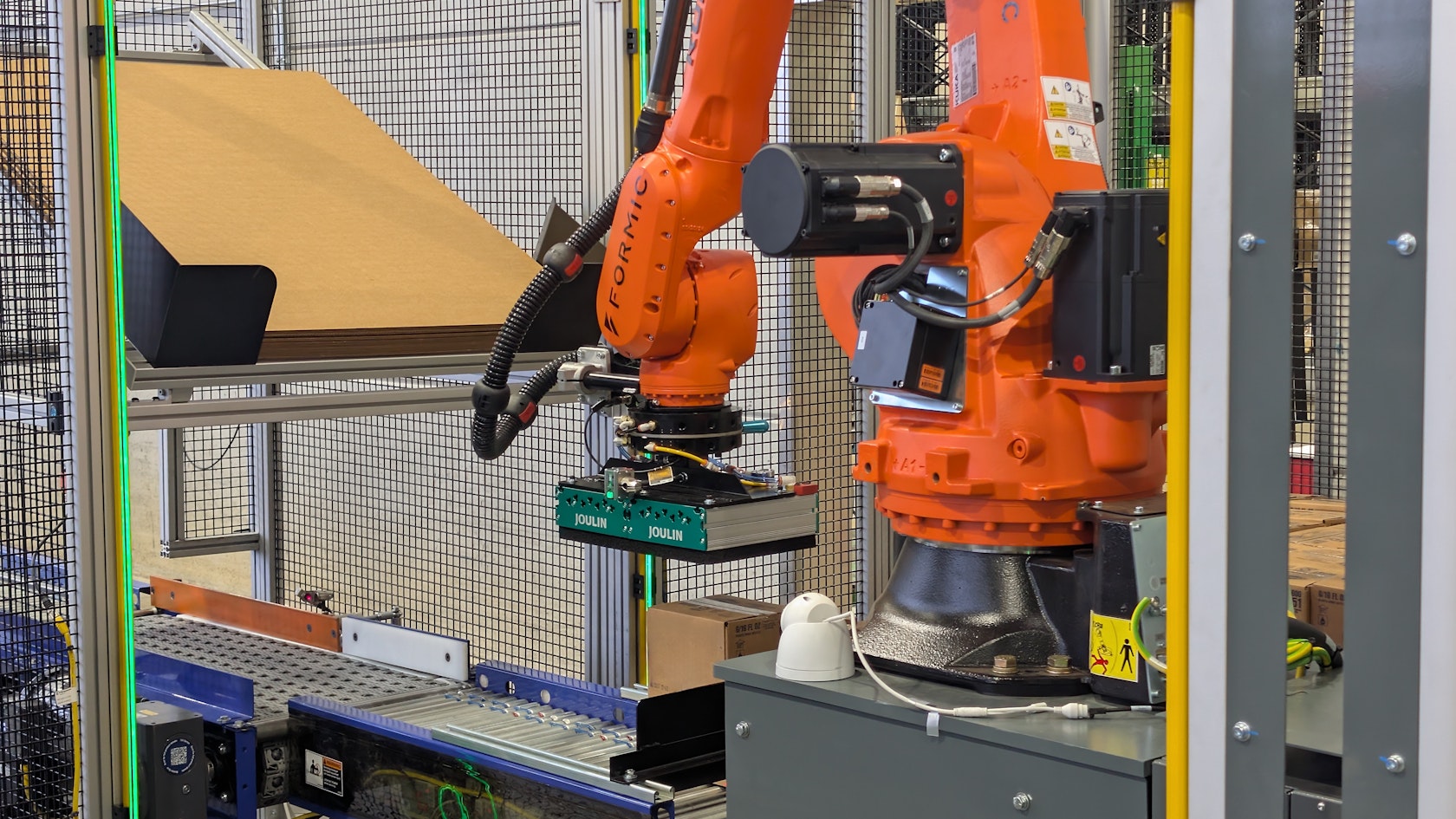
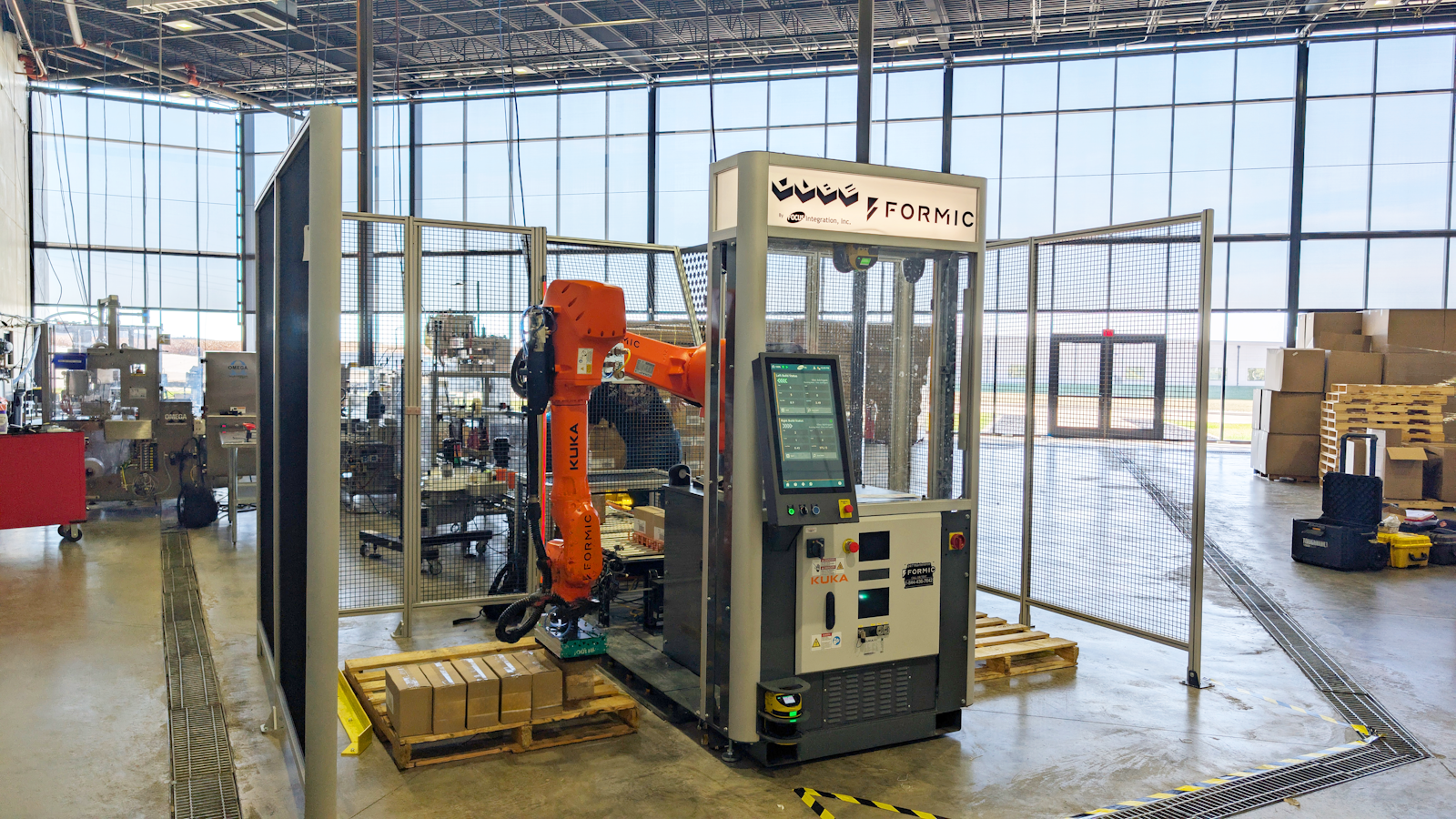
To keep up with demand while prioritizing employee safety and flexibility, Marquis recently deployed two automated palletizing systems through Formic’s Robots-as-a-Service model to handle a wide range of consumer products, including cleaning and personal care items. Alan VanDuyne, Vice President of Marquis, emphasized that automating a repetitive, monotonous task was the most strategic path forward for the busy company.

Why Automation: Solving Labor Challenges
Before automating, VanDuyne said they relied on temporary labor and overtime to close gaps at the end of the line and meet demand. Palletizing, a high-turnover position, requires continuous bending, lifting, and turning of heavy boxes; a task that’s physically taxing and mentally unengaging. The initial impetus for transitioning to robotic palletizers was to automate work that fell short of the care, focus, and standards the team is known for.
Marquis employees are already familiar with automation. Many processes, including blending, sorting, filling, capping and bundling, are automated throughout the facility, so there was “no hesitation” from employees when the company automated palletizing. Team members previously tasked with stacking boxes all day were instead redeployed to roles requiring higher-impact decision-making and creativity.
Automation also offered a clear operational benefit. “We probably pay 40% higher than most of our competitors in the same space to perform the same job,” VanDuyne said. “So we wanted to make sure that the jobs we had folks performing utilized their full potential for thought, creativity, and the ability to think on their feet.”
With the new palletizing systems in place, Marquis protects employees from ergonomic strain while reducing labor costs by roughly 40% compared with manual staffing.
Why Full Service Automation?
When it comes to automation, there are various routes companies can take: an outright equipment purchase, traditional leasing models, or Full Service Automation. For Marquis, partnering with a provider that offered proven reliability and hands-on support was critical.
“We heard how reliable the Formic units were. Knowing that it’s going to be a repeatable and reliable system is key to moving forward,” VanDuyne said.
Formic Full Service Automation provides 24/7 bilingual support, 100% maintenance, and ensures a smooth deployment process. Two deployments later, VanDuyne called them: “One of the best organized, smoothest transitions we’ve had converting to automation.”
Both systems were fully deployed in under three days, including team training, with months of planning and preparation ensuring a seamless transition.
Forward Thinking: Early Wins and Future Plans
Even in the first two months, the benefits of automation were immediately apparent. Direct labor costs for line production have decreased, and employees previously assigned to palletizing tasks have been redeployed to other areas of the business.
Looking ahead, Marquis is focused on continuing to innovate additional high-speed processes, such as fillers and cappers, while concentrating on blending and packaging ethanol-based products. With a history of innovation and strategic use of automation, Marquis is positioned to continue growing efficiently while protecting its employees and keeping operations at the forefront of the industry.
“Automation allows us to operate more efficiently, protect our people, and continue innovating,” VanDuyne said. “The advantages gained through Formic automation are fully aligned with our core values of Safety, Honesty, and Excellence.”