When Leadership and Employees Align: Masters Gallery Automates Palletizing to Make Work Better for Everyone
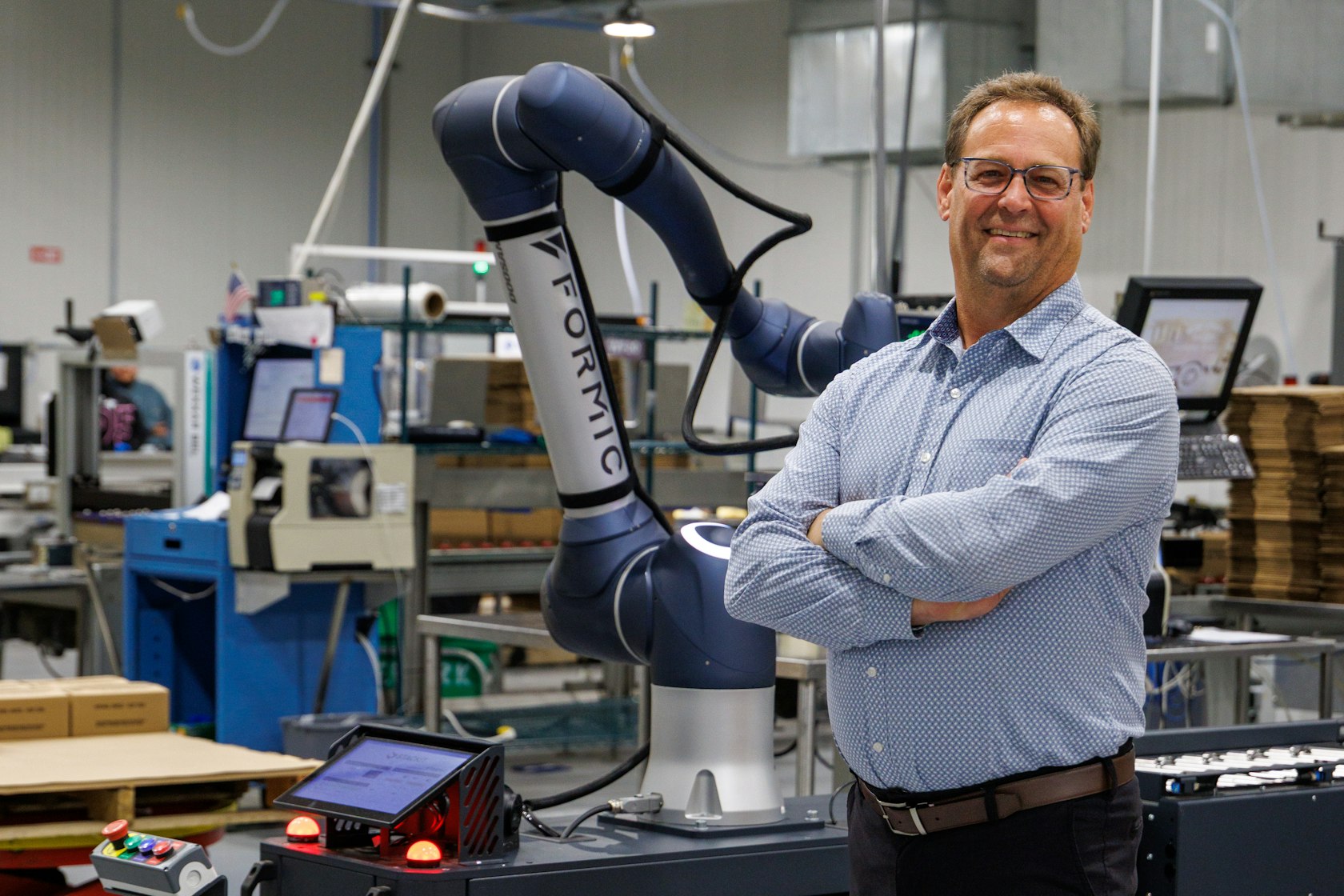
Every year, Masters Gallery Foods West moves more than 18 million pounds of product through its processing rooms. With 160 employees working around the clock, the company’s leadership is focused on one goal: keeping people on the floor doing work they’re proud of, and doing it safely.
That’s not an easy task for workers at the end of the production line. Stacking boxes of bars, slices, and shreds of cheese is demanding, repetitive work that can take a physical toll. The leadership team at Masters Gallery knew something had to change, and their employees agreed.
Automation Is an Investment in Employees
Masters Gallery Foods, with locations in Wisconsin and California, is a family-owned cheese and packaging distribution company. Founded in 1974, the company provides bulk cheese to private-brand retail, food service customers, and wholesale distributors across the United States.
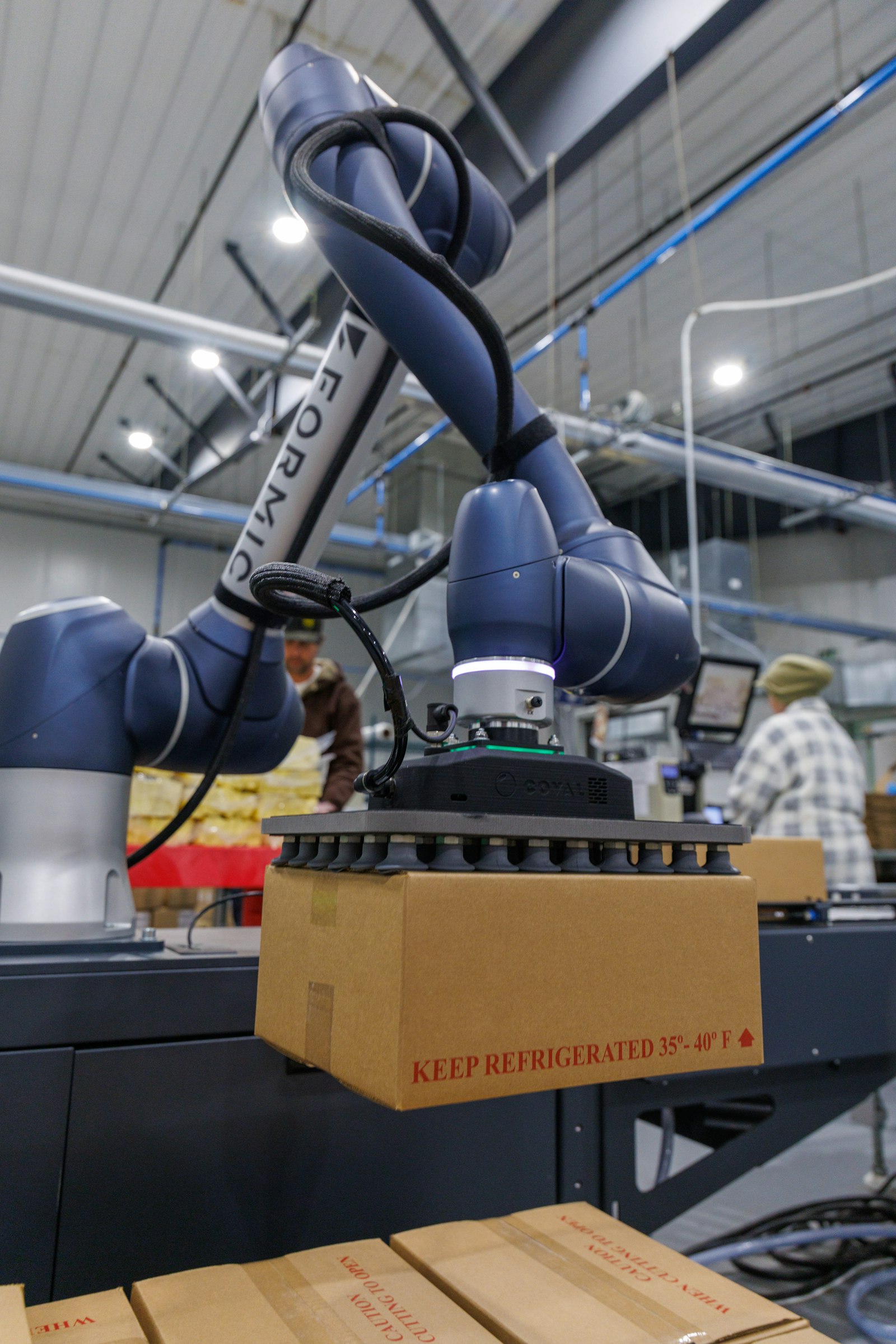
In the last year, Masters Gallery’s California facility transitioned from manual to automated palletizing, eliminating one of the most strenuous and injury-prone jobs on the line. The change wasn’t an order from management: it began with conversations between leadership and line workers, who had seen firsthand how manual stacking was wearing people down.
Maria Perez, the Packaging Lead for Masters Gallery, explained what it was like before automation: “We had to [palletize] ourselves, and it was hard with 40-pound boxes that you were lifting and bending all the way down to put them on the floor, and doing it again and again,” she said. “It’s an eight-hour shift, at the end of the day, your back hurts a lot. You could barely sit down or get up.”
For Perez and her team, the new automated system is a relief. “New people come in, and they no longer get hurt,” she said. “They also get the opportunity to work in different areas instead of stacking boxes all day.”
Doing What’s Right for Employees
This is exactly why the cheese manufacturer invested in automation, Patrick Henson, General Manager at Masters Gallery, explained. The company is committed to not only providing high-quality cheese products but also impacting the lives of its employees, partners, and communities.
“Automation is about health for our employees,” he said. “Companies will say, ‘Our employees are our number one priority,’ but if you don’t walk the walk, can you really believe that? At Masters Gallery, we have a team that truly wants our frontline workers to be able to grow with the company, adapt with it, and keep them healthy.”
Henson emphasized that every system Masters Gallery brings to the floor has to make employees’ jobs safer, easier, or more rewarding.
“Palletizing is just one area where we can put a piece of equipment in and reallocate employees to something less strenuous,” he said. “They can go home with fewer strains and come back ready for the next day.”
Making Automation Accessible: Full Service Automation
Once Masters Gallery decided to automate palletizing, leadership evaluated how to make it possible, considering options from outright purchase to traditional leasing before discovering Formic’s Full Service Automation model.
“We did not have the capital resources to be able to just throw equipment in here,” he said. “We are constrained by the improvements we are already making, so we had to get creative. We looked at the capital outlay to purchase equipment, and realized Formic was an amazing solution where you don’t have to come up with that.”
By partnering with Formic, Masters Gallery gained more than just a robot. The Full Service Automation model includes the equipment, service, maintenance, and performance commitments, all for one fixed monthly rate. This allowed them to distribute their capital across various areas of the floor to benefit not just one part of the line, but multiple.
On top of Formic’s service, support, and contracted performance, Henson explained that Formic’s team was engaged from the beginning in a way that stood out from other options.
“They continued to support our ideas, even when we’d throw challenges their way,” he said. “From the beginning, they did an amazing job of walking us through how the system would look, and then followed that up with continually checking in and supporting us as we adjusted to the addition of automation.”
Automation That Transforms, Not Replaces
For employees, automation can sometimes feel threatening, creating a fear of being replaced. But at Masters Gallery, that’s not the case. Perez emphasized that automating palletizing has opened new opportunities for team members rather than taking them away.
“Nobody is getting fired,” she said. “They are moved or become line leaders, and in the long term, it will help more, and they won’t get hurt.”
Automation is not only a productivity driver but a chance for employees to grow.
Automate Now, Not Later
Deciding to automate feels like a big decision for many companies, and Henson explained that for him, there was a “period of fear” before committing to automating.
“It was on my shoulders to decide if we were going to take this step. If your role is to make decisions, make the decision,” he said. “Take the gamble, and by working with Formic, you can take your money and go start improving other places, too.”
That’s exactly what Masters Gallery has done: automate thoughtfully, invest widely, and always prioritize the people who keep production moving.
“If a company's not growing, then they're dying,” he said. “We’ve automated to maintain the employees we have, honor them, get them higher-paid jobs, and just continue to invest in them and grow with them.”
Get Your Team On Board With Automation