Join us for the grand opening of Formic's Oakland automation lab — Aug 19. RSVP
Home/Solutions/Humanoids
Humanoids & Bimanual Mobile

Generalist robots,
as a service.

Humanoid and bimanual mobile platforms for manufacturers: deployed, supported, and continuously upgraded under Formic Full Service. Fixed monthly price, no CapEx, and no need to become a robotics R&D shop.

Humanoid platform · pilot cell
01 / Why Now

General-purpose robotics is finally real.

For decades, general-task automation was the perpetual "five years away" of manufacturing. That changed. Bimanual mobile robots are running production cycles in pilot programs at real manufacturing facilities today. Humanoid platforms are close behind — moving out of the lab and into narrowly-scoped customer pilots.

Formic is the deployment partner for mid-market manufacturers who want frontier capability without building a robotics team themselves.

  • Pilots designed and run by Formic engineers
  • Same Full Service model, fixed monthly price, no CapEx, all support included
  • Continuous OTA upgrades as capability matures
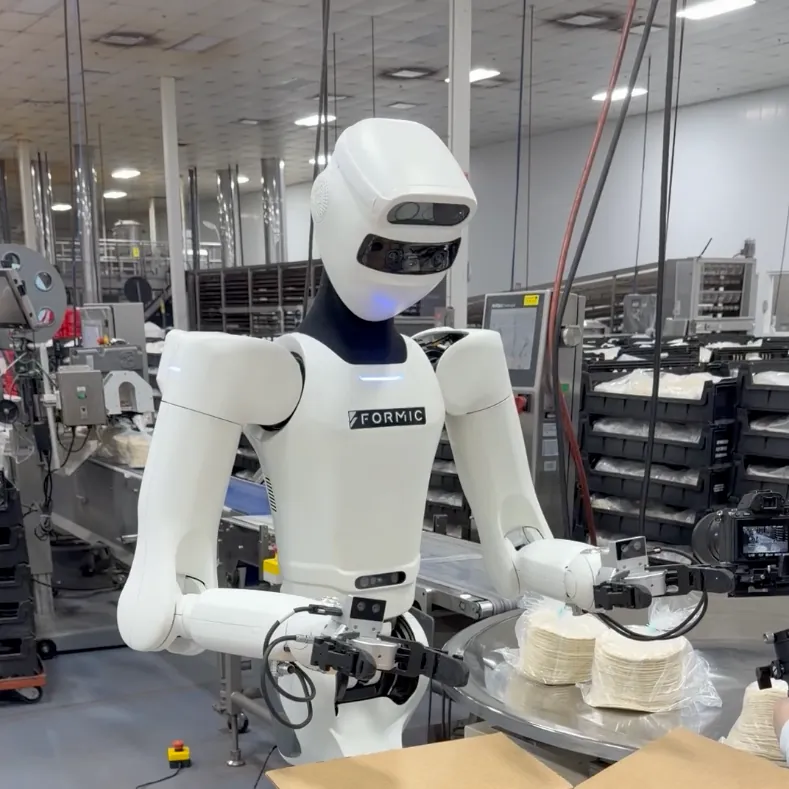
Formic humanoid robot running a pilot task on a manufacturing lineFrontier · pilot
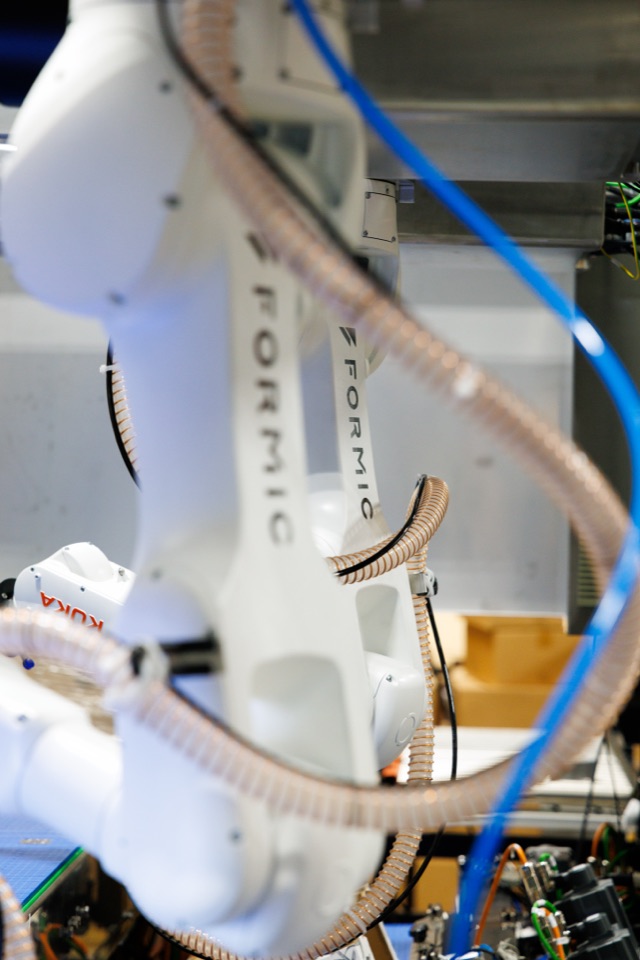
Formic-branded white KUKA arm with Formic Production Intelligence cabling, frontier hardware running under the same Full Service stackFrontier hardware
02 / Mobile Bimanual

Two arms, one base, anywhere on the line.

Bimanual mobile robots handle multi-step manipulation tasks (bin picking, machine tending, kitting, and assist work) and relocate between cells without a fixed footprint. Most useful where the work is too varied for fixed automation but too repetitive for skilled labor.

  • Bimanual manipulation for two-handed tasks
  • SLAM-based navigation, no fixed track required
  • Task-level instruction via demonstration, not g-code
  • Designed for safe, shared-space operation alongside human teams

Operators show the robot, not program it.

03 / Humanoid Pilots

Pilot today. Scale tomorrow.

We're running humanoid pilots with select customers across 2026–2027. Pilots are scoped narrowly (one task, one cell, one shift) and expanded only when the platform proves out economics.

Pilots are priced under the same Full Service monthly model: no capital at risk if the platform doesn't prove out.

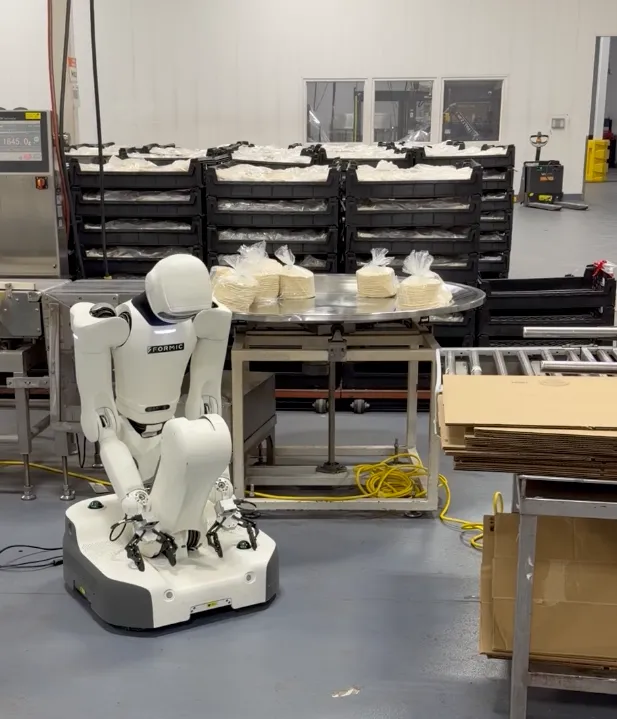
Humanoid robot running a Formic pilot — scoped to one task and one cellHumanoid · pilot
What's Included

One monthly fee. Everything included.

Initial data collection & model training
Platform deployment and commissioning
Model fine-tuning as requirements change
24/7 monitoring, support, and teleoperation intervention as necessary
OTA capability upgrades
All maintenance and parts
Early access to upcoming features
Performance SLAs
FAQ

Humanoid questions.

Are humanoid robots actually ready for production?
Bimanual mobile robots are already running production cycles in pilot programs at real facilities today. Humanoid platforms are close behind, moving out of the lab into narrowly scoped customer pilots. Formic deploys both, so you get frontier capability without building a robotics team yourself.
How is a pilot scoped and priced?
Pilots are scoped narrowly (one task, one cell, one shift), and they're designed and run by Formic engineers. They're priced under the same Full Service Automation monthly model, so there's no capital at risk if the platform doesn't prove out. We expand only once it proves the economics.
How long does it take to go from pilot to full deployment?
Pilot timelines run roughly 60 to 90 days from scoping to first production cycles. Full deployment follows only after the pilot proves the economics, typically another 30 to 60 days for cell build-out and training. The whole process is managed by Formic, so there's no internal project load on your team.
Do we need our own robotics or AI team?
No. Formic handles data collection, model training, deployment, and ongoing fine-tuning, plus 24/7 monitoring with teleoperation intervention when needed. Capability improves over the air as the platforms mature, with no internal R&D required.
How do operators tell the robot what to do?
They show it, rather than program it. Bimanual platforms take task-level instruction by demonstration instead of g-code, and they're designed for safe, shared-space operation alongside your team.

Frontier capability,
fully managed.

Talk with an Expert All Solutions