"We Can Actually Deliver on That": How Floorguard Tripled Kitting Output and Took the Stress Out of Saying Yes
Jameson Clay is in a rare position at Floorguard Products, where he leads both sales and operations. The roughly 30-person concrete coatings maker is based in Illinois, and Jameson emphasized that he lives on both sides of every order.
"We sold all this stuff, now I got to figure out how to actually do it day to day," he said.
For a long stretch, that meant sales was always a step ahead of the floor. Since Floorguard automated its end-of-line kitting and palletizing with Formic, that gap has closed. Output tripled the first week the system went live, and orders that used to take one to two weeks to ship now go out in two days. For Jameson, the biggest change shows up on sales calls.
"Now I can at least say, 'Yeah, we can do that,' and we can actually deliver on that,” he said.
When Sales Outruns the Floor
It wasn't always that simple. Shortly after Jameson joined about two years ago, Floorguard shifted to a distributor-based model. Instead of selling direct to contractors, the company needed to stock far more inventory in smaller package sizes, and its 3-gallon kits became a core product.
At the time, Floorguard sold 80 to 90 of those kits a month. By February of this year, it was selling 3,000. And every one of them was still built by hand.
Someone had to gather the jugs, build the box, fill it, seal it, and stack it on a pallet, with each finished kit weighing 30 to 35 pounds. At roughly two to three hours to build 60 kits, keeping pace took far more than the production team. At the peak, six people were kitting on the floor, including Jameson, his logistics manager, and staff pulled from other roles.
As Jameson put it, it was a good problem to have because sales was winning. But every win meant more hours of repetitive, heavy lifting on the floor, and more people pulled away from the revenue-growing work.
Low Risk, Full Support
With no prior automation experience and no on-site maintenance team, Jameson's biggest questions were practical ones: How do we implement this? How do we maintain it? "When it doesn't work, who fixes it?" he said. "I don't have the people or the skills to do that."
Buying a system outright meant committing serious capital to something the team had no experience with. So when Jameson asked Sylvia, Formic’s Sales Director, to come out and assess the operation, the Full Service Automation model changed the math. Floorguard could start with a one-year agreement, no upfront capital, and Formic handling maintenance and support.
"If it works, we sign a longer contract. If not, yeah, we lost some money on it, but nothing that will destroy us," he said. "The hardest thing to automate, I think, is getting people like me to feel comfortable with an automation process."
Formic took the implementation and upkeep off Floorguard's plate, and they didn't have to devote new resources to it.
Six months after go-live, the system runs day in and day out without needing his attention. His production team works directly with Formic, and he no longer reviews the reports Formic's customer success team sends over because the people using it every day are the ones who own it.
"I have no thoughts about the automation anymore," he said. For Jameson, that's the point. The best automation is the kind you don't have to think about.
Triple the Output Overnight
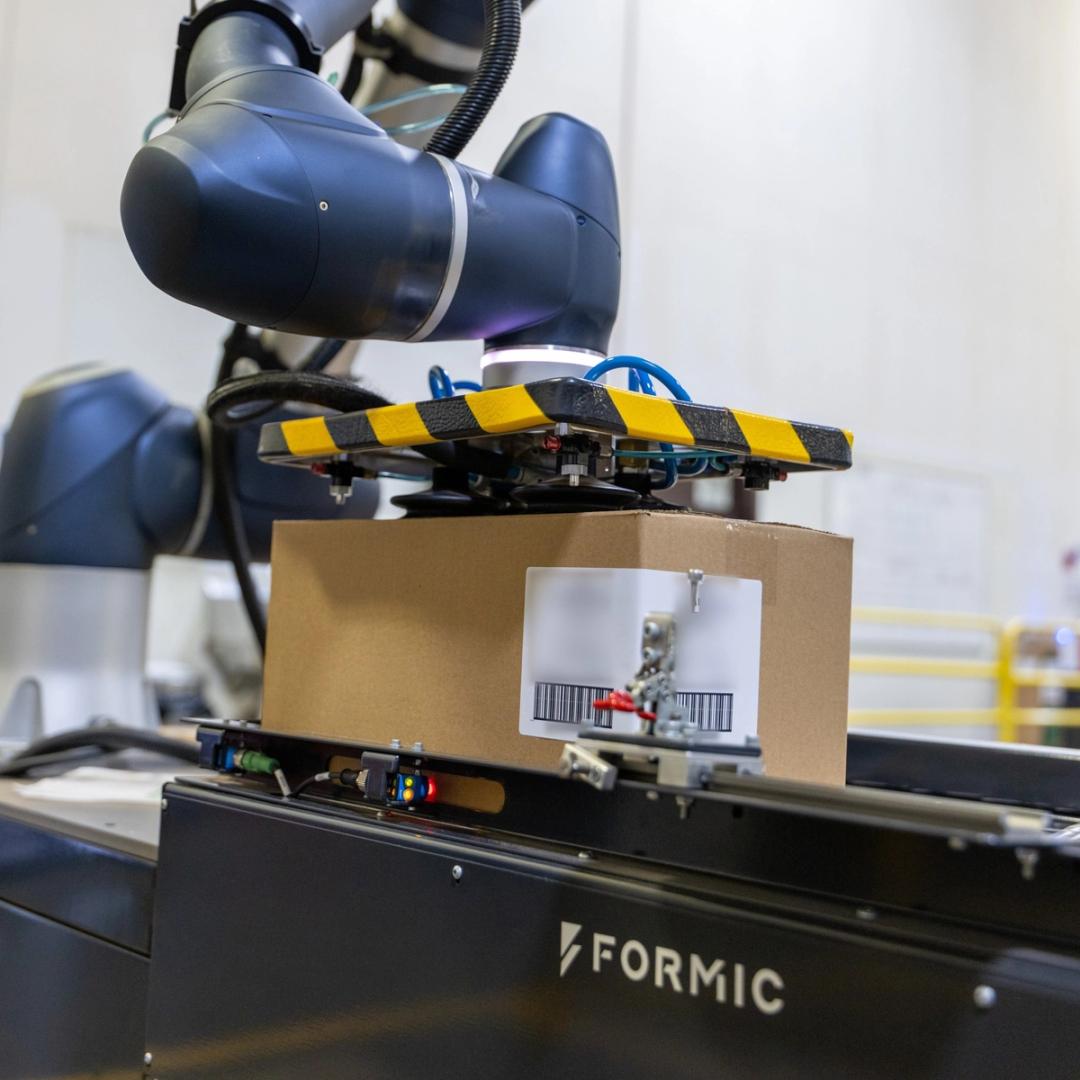
The biggest win for Jameson was tangible, and he didn’t just describe it; he pulled up Floorguard’s operations dashboard to show the growth. The system went live in early April. The week before, Floorguard built about 300 kits. The week after, it built about 1,100.
“We tripled our output overnight, and it kept that number pretty consistent throughout the summer,” he said.
The best week Floorguard ever had by hand topped out around 700 kits, and that took six people, including Jameson, stepping away from their regular jobs to build them. Since go-live, the team has beaten that number in nearly every week, with a fraction of the people. Across the six months since, weekly output has averaged more than double what it was before automation.
“Triple production in half the time,” Jameson said. “The biggest driver of this isn’t the machine anymore. It’s us producing enough stuff in the right quantities to make those kits.”
Now, It’s Easy to Say “Yes” with Confidence
Every salesperson knows the pull to say yes first and figure out the details later. In the past, big 3-gallon orders used to have Floorguard scrambling, with a second thought from Jameson: "Oh shoot, we got to figure out how to do that."
Now, he said, "That's easy."
The constraints that remain are smaller ones, like getting the right pigments and raw materials in on time. "It just changes it from worrying about 'I got to throw four more people at it' to 'Oh, I should order a raw ingredient earlier,'" he said. "That's a very different and much smaller problem to have."
Floorguard's 3-gallon kits used to nearly be made to order, but now sit in stock. Jameson added that Floorguard now keeps a month's worth of what it knows customers will order on the shelves, so the team can just pick it and go. An order of six pallets that used to take one to two weeks now ships in two days, and when he checks in with customers about whether orders are arriving faster than they did in the spring, the answer is always yes.
One more win for Floorguard is that faster fulfillment shows up on the balance sheet, too. "You're faster turning that stuff that was inventory into actual cash and able to invest it back in your business, back in your people, and back in the company," he said.
More People, Better Jobs, and a Robot Named WALL-E
One of the biggest misconceptions about automation is that it eliminates jobs. "People hear the word automation, they think bad things," Jameson said. But for Floorguard, it opened up pathways to better work for its employees. The same people still handle multiple tasks, but one of those tasks is now a lot easier and faster.
Since going live with automation, Floorguard has hired three new full-time employees for fulfillment, filling, and blending: roles "where people skills and human thought and intellect are still needed," as Jameson put it.
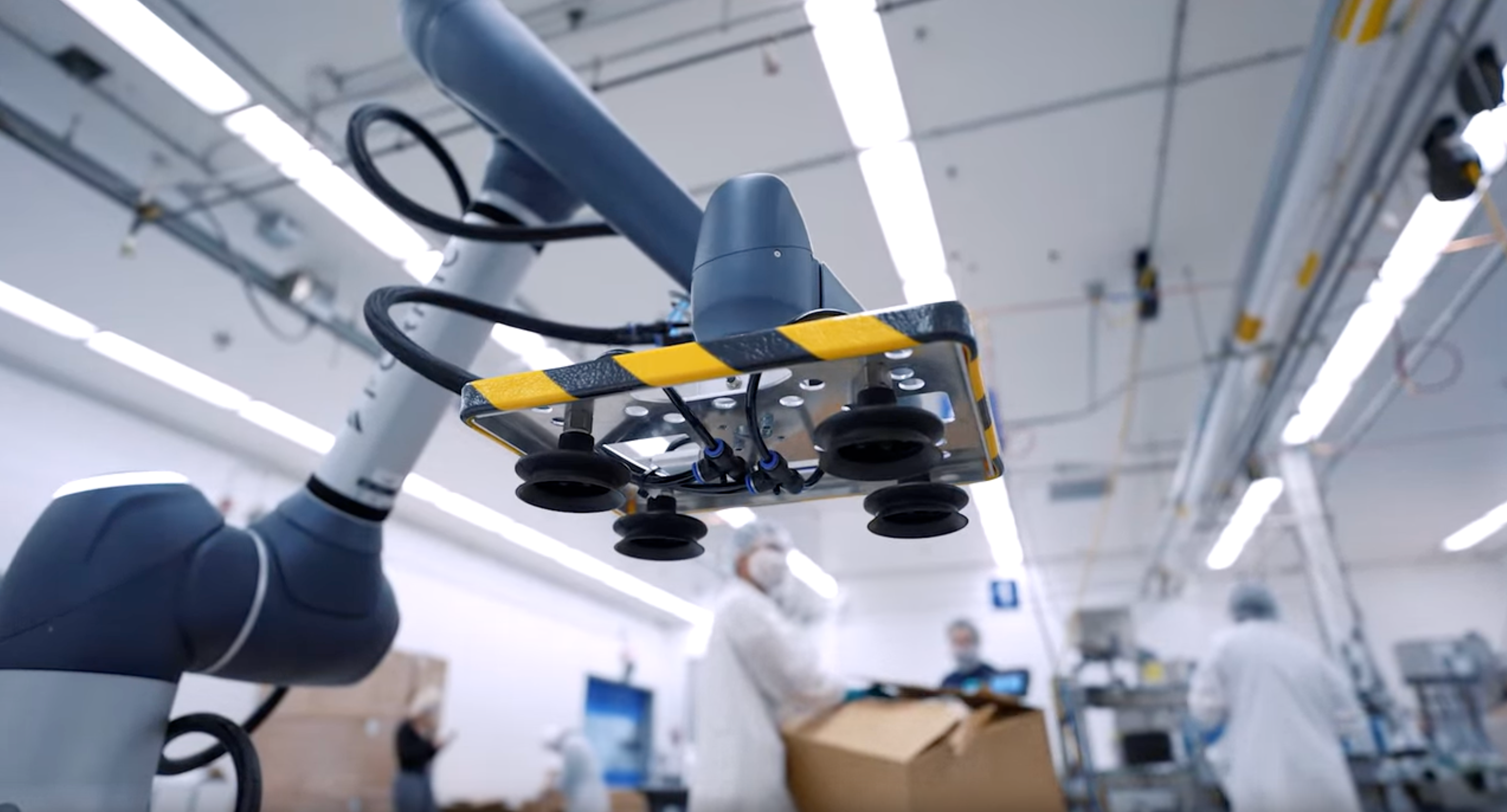
But the three new hires aren't the only new members of the team. They've named their Formic cobot WALL-E, and they welcome visitors to tour the floor and see WALL-E work live, from candidates to customers to vendors.
"People love seeing WALL-E," Jameson said. "It's a fan favorite."
What’s Next for Floorguard
Next on the automation to-do list is a palletizer for Floorguard's 5-gallon pails, each weighing 55 to 60 pounds. "I think that's going to fundamentally change our output, our throughput, and then also just our quality of life for our team back there," Jameson said.
If a peer asked whether they should automate, his answer is simple: "I wish I did it sooner." His one caveat is to get your process down first. "It's easy to say we're automated, bring in a new machine, and then realize, ‘Oh, we got to figure out how this fundamentally changes our process flow,’" he said.
Floorguard is still fine-tuning its flow to get the most out of the system, and Jameson sees that as the real work ahead.
"Those are harder things to do, I think, than just bringing online an excellent Formic-deployed system."
Take Jameson’s advice and start sooner. Get a free on-site automation assessment here.