Your End-of-Line Automation Roadmap for CPG
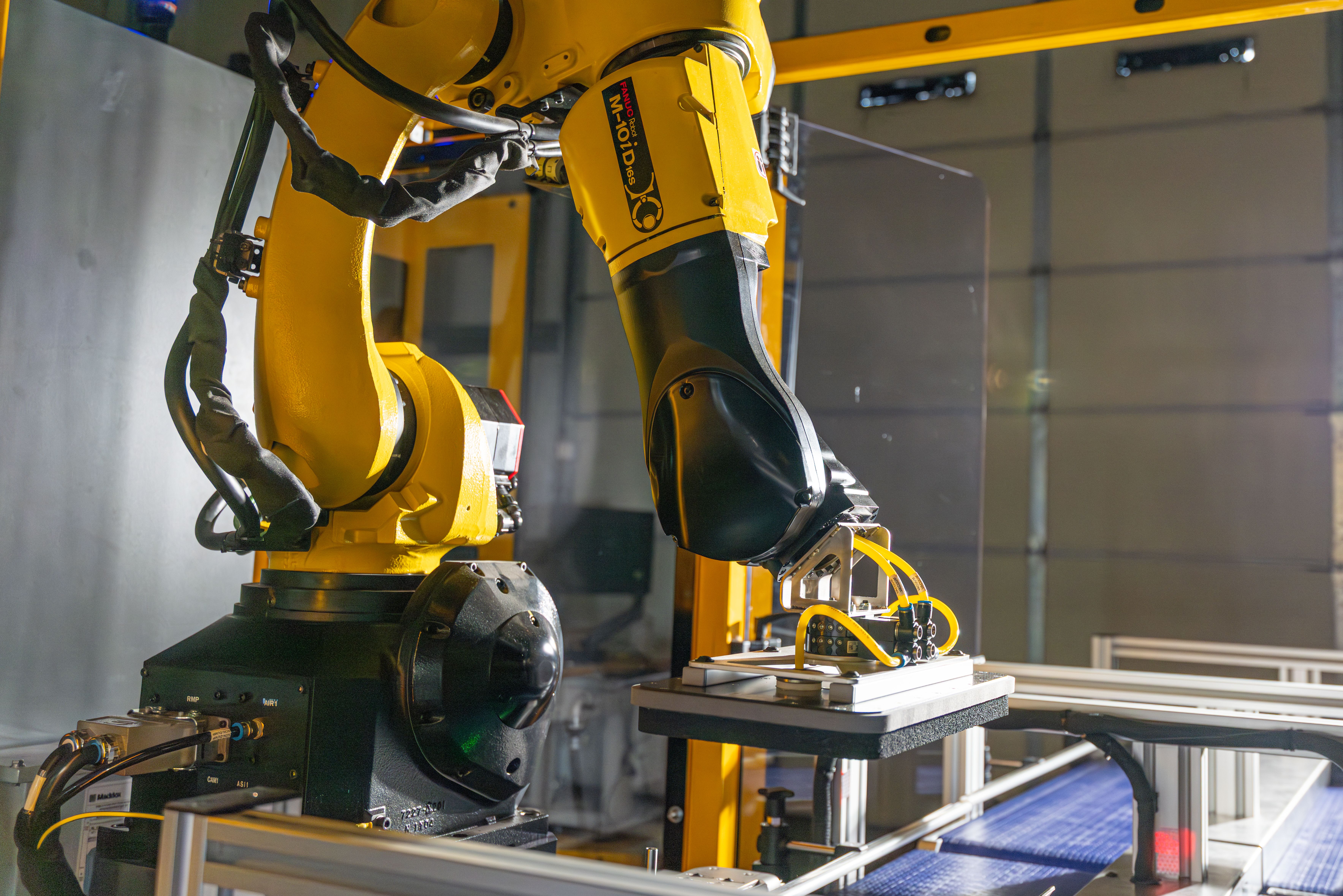
We hear the same instinct from almost every manufacturer starting their automation journey: automate the hardest, most labor-intensive task first, since that's where the biggest win is.
It's the wrong move.
The manufacturers who get the most out of automation start small, get an early win, and scale from there. That means starting at the end of the line, in a specific order, so each step builds on the one before it instead of creating new bottlenecks.
The order that works, in one sentence: case sealing, pallet securement, power conveyors, palletizing, case erecting, case packing, then material handling.
This roadmap breaks down why that order matters, what data to bring to each step, and what to expect in cost and complexity along the way. If you haven't yet decided which automation model fits your operation, How to Rent a Robot for CPG End-of-Line Packing covers DIY, traditional integration, and Robots-as-a-Service side by side.
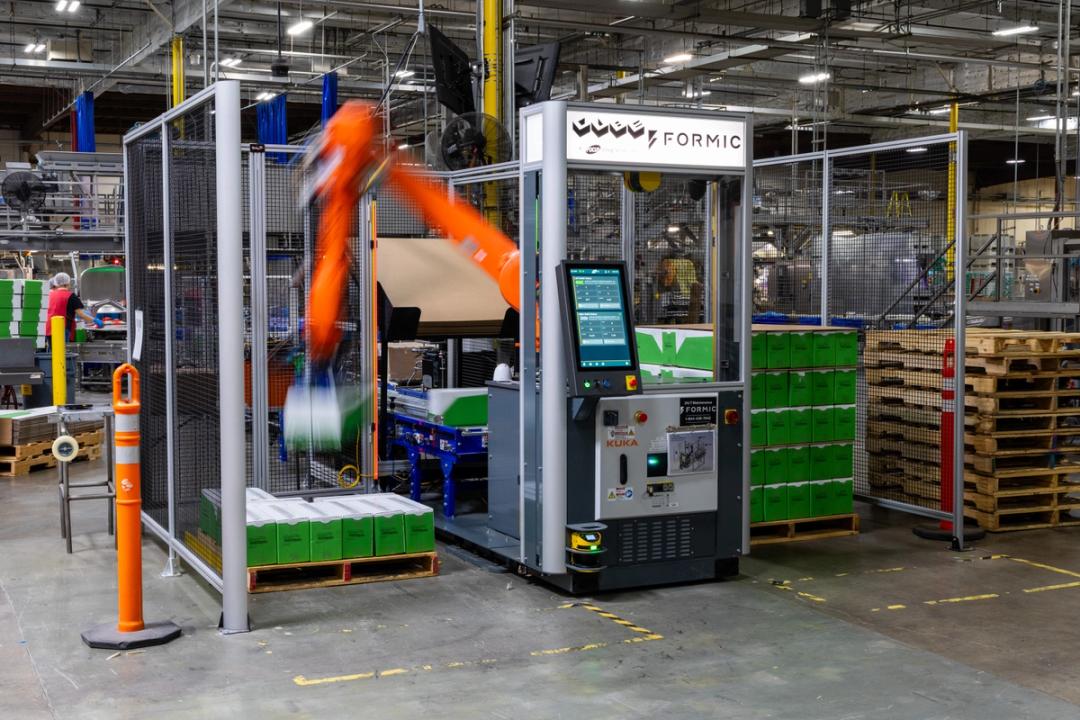
Why Start at the End of the Line
Most CPG production floors move through the same general flow: receiving, infeed and pre-treatment, processing, primary packaging, quality inspection, case packing, palletizing, pallet securement, and pallet transport to storage.
It's tempting to automate the most complex step first because it looks like the biggest impact. In practice, the bigger win comes from the tasks that are straightforward to automate but hardest on your people: repetitive, ergonomically brutal, and the reason turnover never stops. For most manufacturers, that's the end of the line.
The Right Order to Automate Your End of Line
Assuming you're starting from zero automation on the floor, here's the order that delivers the fastest wins with the lowest risk:
- Case sealing: taping or sealing the case shut
- Pallet securement: stretch wrapping or strapping for transport
- Power conveyor: moving materials down the line
- Palletizing: stacking cases onto pallets
- Case erecting: forming boxes before they're filled
- Case packing: putting product into cases
- Material handling: moving finished pallets to staging or shipping
Each step below covers what it takes to automate and where it ranks on cost and complexity.
1. Case Sealing
Case sealing is the easiest place to start. It's low complexity, low cost, and delivers a fast return, since a properly sealed case is also a more stable one once it hits the pallet and the truck.
Before scoping a system, have this ready:
- Case specs: dimensions, weight, material, and how much the size varies across SKUs
- Labeling needs: label type, placement, print specs (barcodes, batch codes, expiration dates), and whether label size is standardized or dynamic
- Line data: current and peak cases per minute
- Floor constraints: available footprint, case transport method, and environmental factors
- Compliance: OSHA, GMP/FDA, and sanitation requirements that apply to your product
Cost and complexity: Low upfront cost, low operational and service complexity, high ROI, low total cost of ownership. This is about as close to a plug-and-play automation win as it gets.
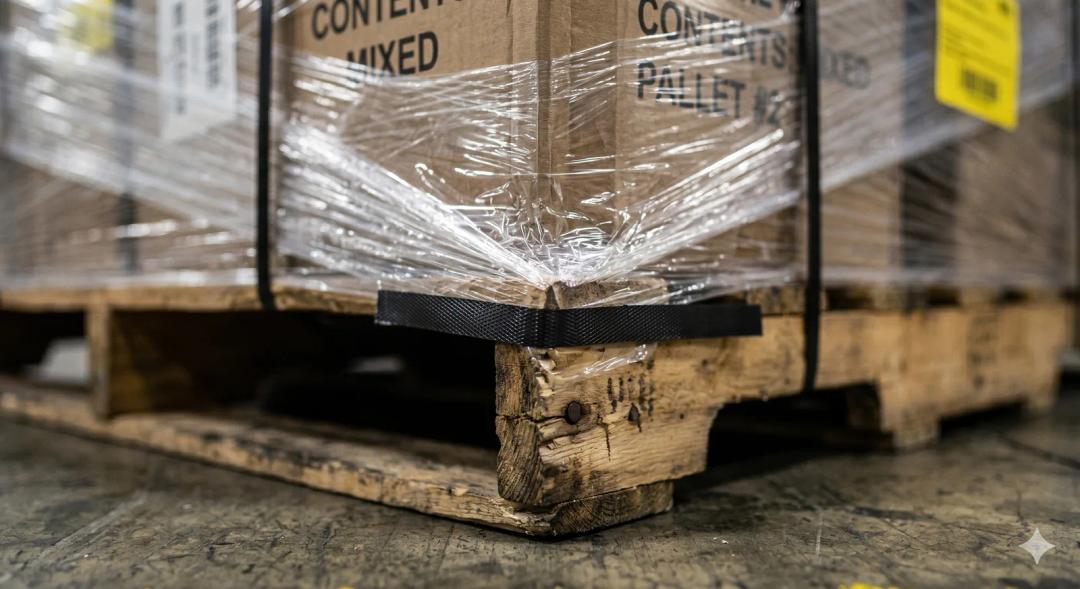
2. Pallet Securement
Pallet securement, whether stretch wrap or strapping, has one of the best ROI-to-cost ratios on this list. It's not a simple process to scope, though. Getting the wrap pattern, film gauge, or strap tension wrong means unstable pallets in transit.
Bring this data to your scoping call:
- Load characteristics: pallet dimensions, material, weight range, and whether the load shifts or needs special handling
- Securement method: film type and gauge for wrapping, or material and tension strength for strapping, plus wrap pattern or strap placement
- Throughput: current and target pallets per hour, and whether load sizes vary
- Transport needs: vibration resistance for how far pallets travel, label visibility requirements, and stacking needs
- Compliance: OSHA, GMP/FDA, and sanitation standards
Cost and complexity: Low upfront cost, low complexity on both the operational and service side, high ROI, low TCO.
3. Power Conveyors
Once case sealing and pallet securement are running, a driven or powered conveyor becomes the connective tissue for everything else on your line. It cuts manual handling between stations and sets up the rest of your automation to talk to each other.
Data to have ready:
- Product characteristics: dimensions, weight range, bottom surface type, and orientation needs
- Line layout: distance between stations, floor space, path shape, and where product needs to accumulate or transfer
- Conveyor type: belt, roller, chain, or modular plastic, plus zone control and sensor needs
- Throughput and integration: current and target line speed, synchronization with upstream/downstream equipment, and communication protocols (Ethernet/IP, Modbus, etc.)
- Compliance: lockout/tagout standards, guarding, and sanitation for regulated environments
Cost and complexity: Moderate upfront cost and operational complexity, since layout matters here more than any other step. Service complexity stays low. ROI and long-term value are both high.
4. Palletizing
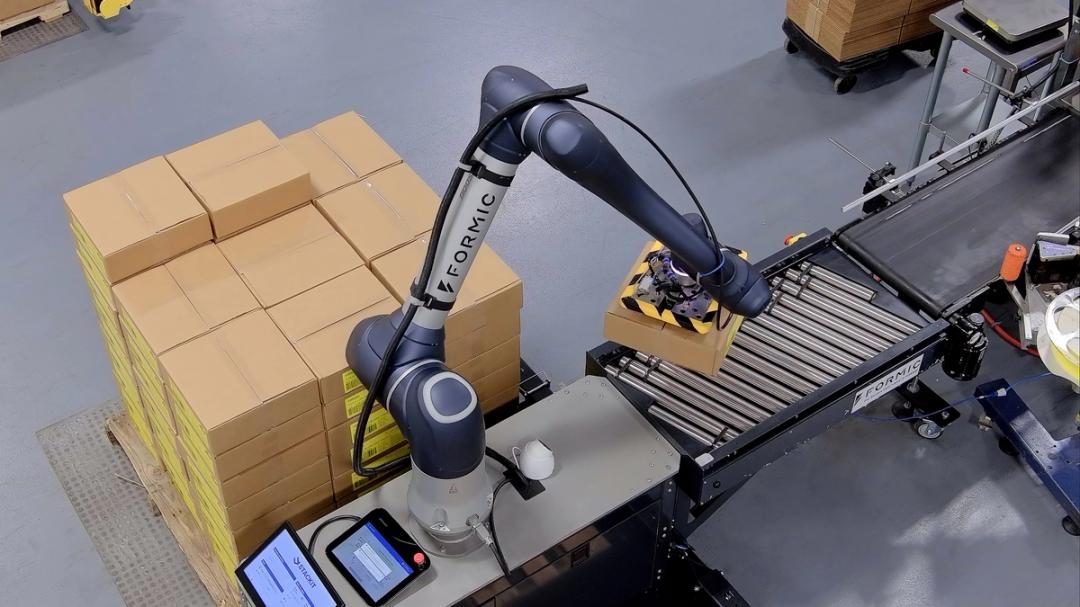
Palletizing is one of the fastest, most reliable early wins in automation, and it's usually where manufacturers decide between a cobot and a traditional industrial robot.
Cobots and industrial robots differ in a few key ways.
On collaboration, cobots work safely alongside people, usually without fencing, while industrial robots operate inside safety fences.
On speed and payload, cobots run at lower speeds with lighter payloads, while industrial robots handle higher speeds and heavier payloads.
On flexibility, cobots are easily reprogrammed and redeployed, while industrial robots are built for high-volume, repetitive tasks in a fixed position.
On setup, cobots require quick, minimal infrastructure changes and a small footprint, while industrial robots need a more complex setup and larger footprint.
On cost, cobots have a lower upfront cost and faster return for smaller-scale automation, while industrial robots carry a higher upfront cost but are built for large-scale operations.
Data to bring to scoping:
- Product specs: dimensions, weight, material, stacking orientation, and size variation
- Pallet specs: type, size, weight capacity, height limits, and pattern configuration
- Line data: current and peak throughput, number of lines feeding the palletizer, and downtime frequency
- Floor constraints and compliance: available footprint, environmental factors, OSHA, GMP/FDA, and sanitation standards
Cost and complexity: Moderate upfront cost and moderate complexity on both the operational and service side. RaaS models, like Formic, specifically remove much of the upfront barrier here. ROI is high.
5. Case Erecting
Once case sealing and palletizing are automated, throughput climbs, and manual case erecting turns into the next obvious gap. Nobody wants a team standing around building boxes by hand to keep up with a faster line.
Data to collect:
- Case specs: dimensions, weight, material thickness, style, and how much variability the system needs to tolerate
- Line data: current and peak speed, number of SKUs and case sizes, and how it needs to align with downstream sealing and palletizing
- Floor constraints: footprint, clearances, and integration with existing conveyors
- Compliance: OSHA, GMP/FDA, and sanitation requirements
Cost and complexity: Low upfront cost, low operational complexity, moderate service complexity due to more frequent light maintenance. ROI is high; TCO is low.
6. Case Packing
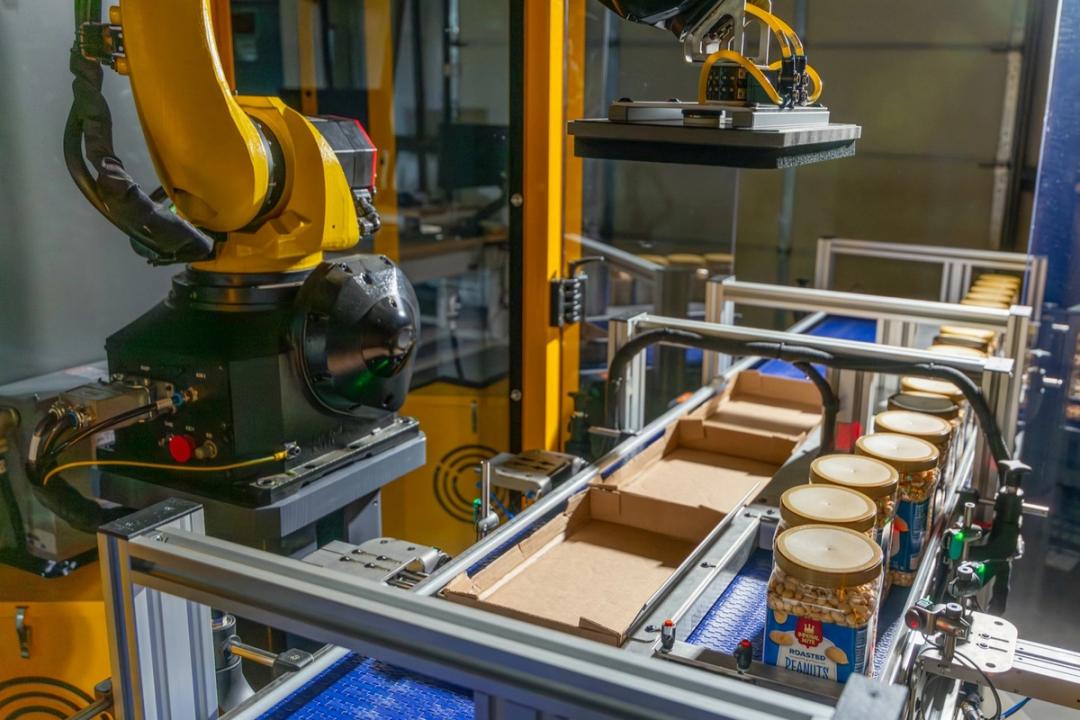
Case packing closes the end-of-line loop, but it's also the most complex step on this list, which is exactly why it belongs near the end, not the beginning. It's tempting to automate this first because it's often the highest-headcount role on the floor, but resist that instinct. Case packing systems are harder to access and troubleshoot, so it pays to build automation experience elsewhere on the line first.
Data to bring:
- Product specs: dimensions, weight, material and fragility, orientation requirements, and stackability
- Case specs: type (wraparound, tray, display-ready), dimensions, material, closure method, and units per case
- Line data: current speed, product infeed rate, case loading speed, and changeover frequency across SKUs
- Compliance: OSHA, GMP/FDA, and sanitation requirements
Cost and complexity: High upfront cost and high complexity across operations and service, since this is typically a fully customized solution. ROI is still high, but TCO runs higher too. RaaS models, like Formic, help offset the upfront barrier.
7. Material Handling
With the packing line automated end to end, material handling, usually an autonomous mobile robot (AMR), takes over moving finished pallets to staging, storage, or the dock. It's also the step that gets you out of the forklift-operator hiring cycle for good.
Data to have ready:
- Load characteristics: type, dimensions, weight range, stability, and whether the robot needs a conveyor or gripping system
- Pallet specs: type, size, weight (empty and loaded), and stacking needs
- Facility layout: travel distance, flooring conditions, aisle clearance, obstacles, and charging locations
- Traffic management: collision avoidance, interaction with human workers and forklifts, and speed limits
- Environmental factors: dust, debris, moisture, and lighting conditions that could affect sensors or cameras
Cost and complexity: Moderate upfront cost and moderate complexity on both operations and service. ROI is high, and TCO is low, since ongoing maintenance is simpler than keeping a forklift fleet running.
Building Your Roadmap
The order matters because each step reduces risk for the one after it. Case sealing and pallet securement are the fastest, lowest-risk wins, and they buy you the credibility and confidence to take on palletizing next. By the time you reach case packing, the most complex and highest-cost step, your team has already run through six deployments and knows what automation looks like on your floor.
But if automating your entire end-of-line is a priority and you’re trying to move quickly, Formic Fast Track automates the entire end-of-line under one agreement and with one partner, instead of multiple. Plus, you don’t manage the systems.
You don't need to solve every step at once, and you don't need to have every data point above finalized before your first conversation with a provider. But walking in with even a rough version of this picture means a faster, more accurate scope and fewer surprises once the system arrives.
If you're ready to map this roadmap onto your specific line, talk to a Formic automation specialist here.