How to Rent a Robot for CPG End-of-Line Packing
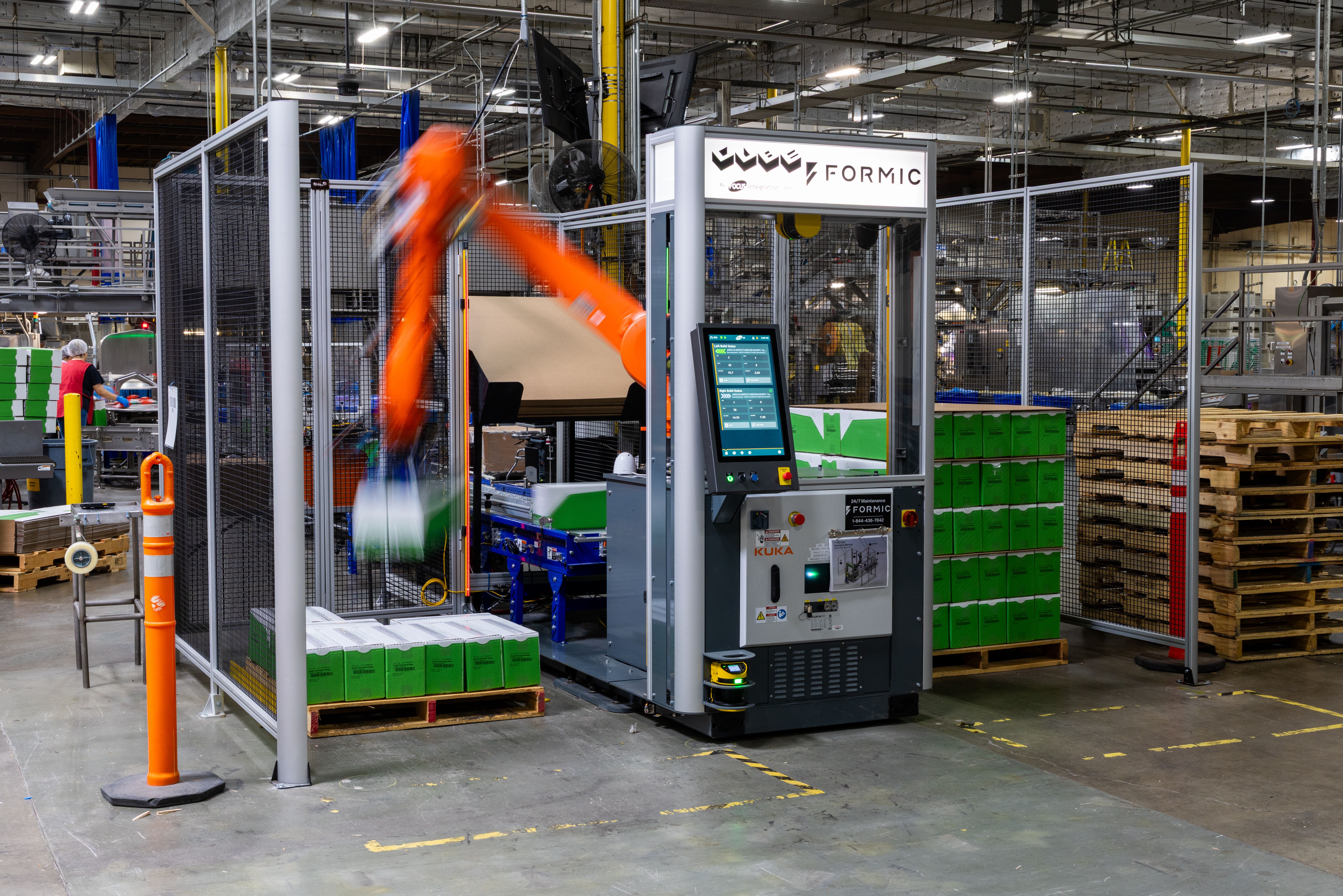
We talk to manufacturers every week who tell us the same thing: they see constant turnover at the end of their line. When they do finally fill a position, employees don’t last long due to the constant bending, lifting, and twisting required to pack and stack heavy boxes.
At Boxed Water, for example, employees were stacking 28-pound cases of water shift after shift, leading to ergonomic injuries and burnout. Not only that, but the stacks were imperfect, leading to leaning pallets and damaged product.
That’s why many manufacturers are turning to automation: 73% plan to increase automation investments over the next three years, and nearly half (46%) specifically target robotics.
Robotic automation for CPG end-of-line packing is no longer a large-enterprise-only investment. With Robots-as-a-Service models now widely available, manufacturers of all sizes can get a system running in weeks, not years. But getting started can feel daunting, especially when the instinct is to automate the most difficult tasks first. But manufacturers should start at the end-of-line, with pallet wrapping, palletizing, and case packing to establish quick wins before scaling from there.
What to Automate First (and Why)
Instead of turning to the most difficult task on the line, start with pallet wrapping, palletizing, and case packing, in that order. These are the end-of-line bottlenecks that slow everything upstream, and they're where turnover, injuries, and missed deliveries tend to pile up.
End-of-line packing and stacking are repeatable tasks that become laborious for employees quickly. Imagine continuously lifting boxes for 6-8 hours, around-the-clock, five days a week. It’s the most common bottleneck on the production line, keeping management on the turnover, hiring, and retraining merry-go-round.
CPG manufacturers should consider automating their end-of-line if they've experienced any of the following in the last 12 months:
- More than 30% turnover in packing and stacking roles
- Two or more workers' comp claims from lifting or repetitive-motion injuries
- Two or more customer complaints or fines for damaged or out-of-spec product
- More than 5% of orders missed on-time, in-full
- Inability to scale output during peak demand
- Regular use of temp labor to keep the line moving
- Excessive downtime during changeovers
- Production growth delayed or business declined due to line constraints
If two or more of these apply, the line is telling you something. The question isn't whether to automate: it's which model makes the most sense for your operation.
The 3 Ways to Get a Robot on Your Line Today
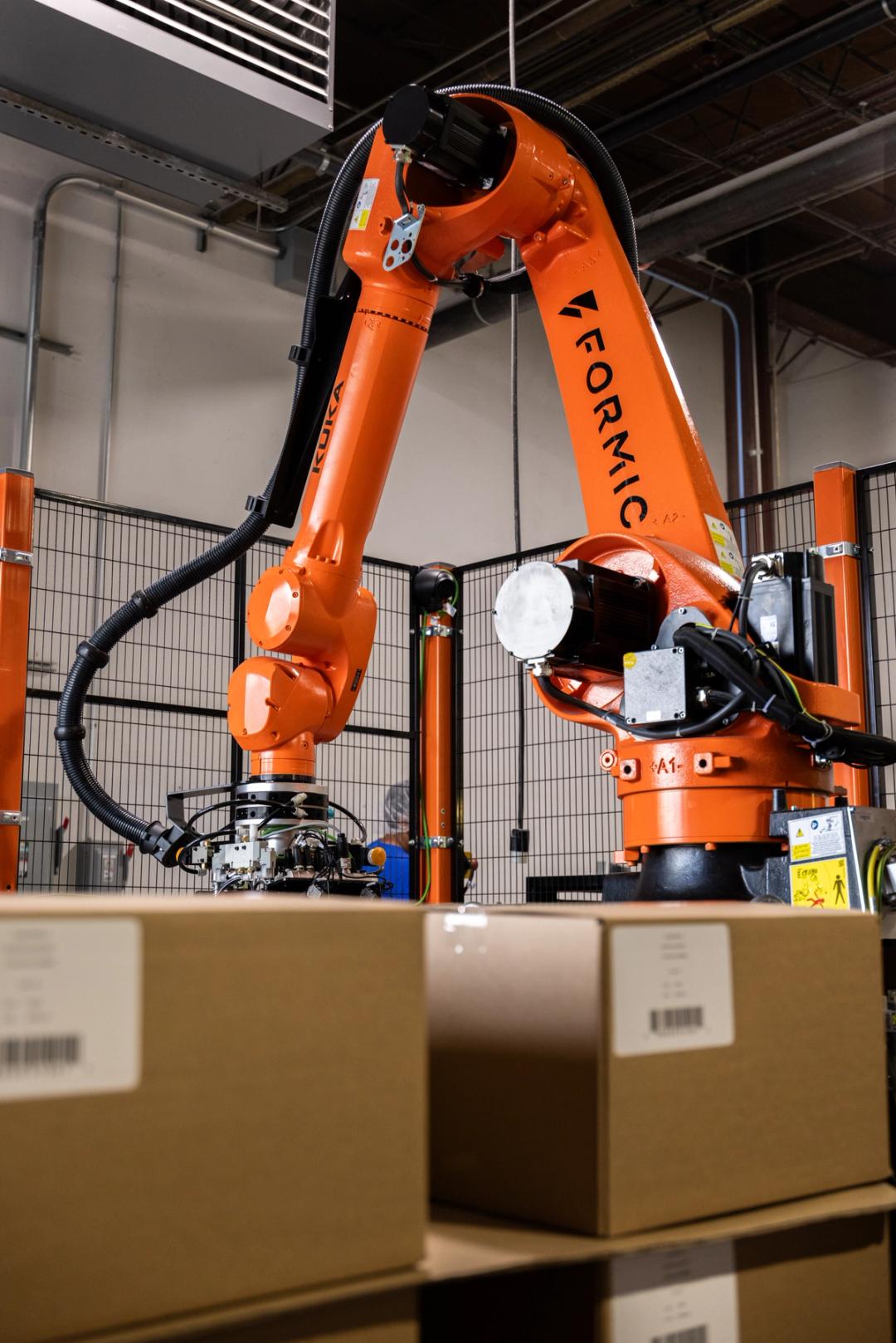
Robotic automation for CPG packaging lines can be approached three ways: DIY, traditional integration, or Robots-as-a-Service. It’s important to identify the option that’s best for your business needs. From budgets to customized solutions to customer base, there are a variety of things to consider before going full speed ahead with automation.
Here are the three primary automation options for CPG manufacturers getting started:
1. Do It Yourself (DIY)
DIY automation works best for manufacturers with spare in-house engineering capacity, a sizable maintenance staff, and moderate CapEx available to invest in used or refurbished equipment. It can make sense for temporary projects or lines running lower-volume, flexible SKUs where a forgiving customer base gives you room to troubleshoot and iterate.
The tradeoff is real, though. DIY saves money up front but places every operational risk on your team. If your engineers are stretched thin, your timeline is tight, or your customers expect consistent throughput, the margin for error gets very small, very fast.
2. Traditional Integration
Working with a traditional systems integrator is the right move for manufacturers who need a highly customized solution, have large CapEx budgets, and plan to run the same equipment or SKUs for five or more years. It also requires strong in-house project management and a maintenance team capable of keeping the system running at full capacity long after installation.
The keyword is ownership. You get control and customization, but the long-term success of the system still rests with your team. If the integration goes sideways or production needs shift, you're managing the fallout. For large, stable operations with the internal resources to support a system over its full lifetime, this model can deliver strong ROI. For everyone else, it carries more risk than it appears.
3. Robots-as-a-Service
Robots-as-a-Service (RaaS), also called Full Service Automation, is the fastest-growing model for CPG manufacturers getting started with robotics. It's the right fit for companies that have never automated before and want to learn how robotics affects their line, teams facing urgent production demands, and operations that expect their needs to shift over the next few years.
Providers like Formic handle everything from equipment to maintenance to performance guarantees, so manufacturers can focus on production rather than troubleshooting. There's no long-term lock-in and no large up-front investment, making it especially well-suited for plants with long capital project queues or smaller improvement budgets who still need automation-grade results now.
All three models can work. The fastest path to a running system, without the operational risk, is Robots-as-a-Service.
What to Look for in a Robots-as-a-Service Agreement
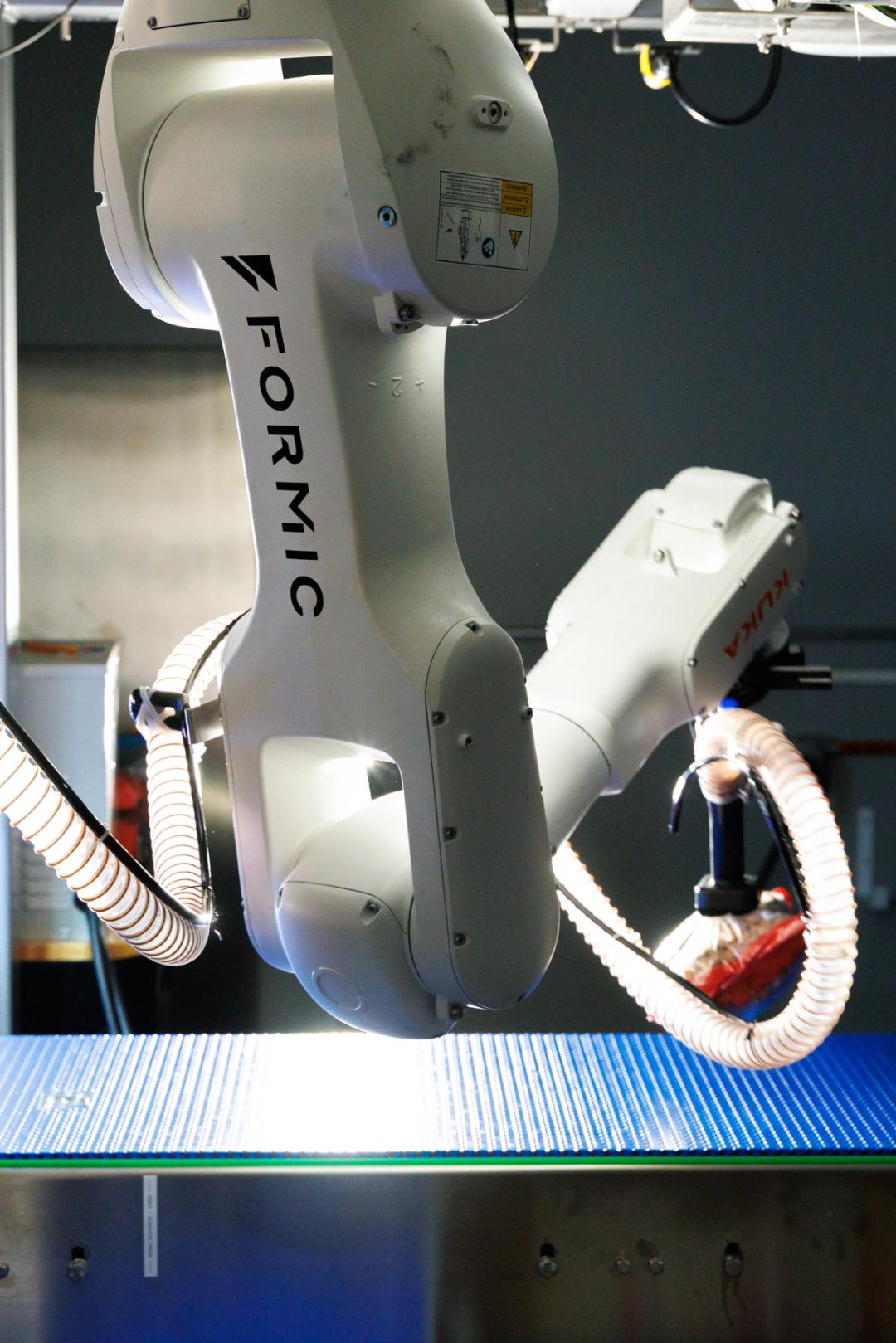
Robots-as-a-Service contracts come in a few different flavors, but there are a number of coverages that should be included to ensure long-term success and avoid unexpected problems and downtime.
1. Full maintenance coverage
One of the biggest benefits of going the RaaS route is that you don't need an internal maintenance team to manage the automation; the owner of the system does it for you.
Your RaaS agreement should include 24/7 technical support and 100% preventative and corrective maintenance. That means if your system isn't running properly, it's on companies like Formic to solve it, not on your team.
This also means you don't have to hire automation engineers. You have a partner on board to manage the system.
2. Contracted uptime
When you work with a vendor, you might have a good system install, but that doesn't mean it's always going to run as planned. We've worked with dozens of companies that complained that the system worked for a while, but when something went wrong, it took weeks or months for the vendor to resolve it.
In your RaaS agreement, contracted uptime of 90% or higher should be a non-negotiable. At Formic, we average 98% uptime, and we're incentivized to keep your system running because if it's not, we've broken our agreement.
3. System flexibility
Business needs change. As you take on new contracts, swap product SKUs, or move into new facilities, your RaaS agreement should flex with you.
This means your provider should be able to reprogram, reconfigure, or redeploy your system without charging you for the change. Plus, you should be allowed to swap systems if you outgrow one. Look for language that explicitly covers product changeovers, line reconfigurations, and facility moves. If your agreement locks you into a fixed setup, you're not getting the full value of RaaS.
4. Ownership of the system
With a RaaS model, you're not buying the equipment, which is the point. But that also means you need to be clear on who owns what, and what happens at the end of your agreement.
A solid RaaS contract will spell out who is responsible for the hardware if it's damaged, what happens to the system if you want to exit the agreement early, and whether you have any option to purchase the equipment down the line. Some agreements include a buyout clause; others don't. Either way, you shouldn't have to guess.
If the contract is vague about ownership or exit terms, that's a red flag worth pressing on before you sign.
The right RaaS agreement isn't just a contract. It's a reflection of how much skin your provider has in the game. If they're not willing to commit to maintenance, uptime, flexibility, and clear ownership terms, they're selling you a product, not a partnership.
How to Scope Your Production Line
Before you get on a call with an automation provider, the more data you can bring to the table, the faster and more accurately they can scope a system for your line. You don't need to have everything figured out, but there are a handful of inputs that every serious vendor will ask for.
When manufacturers ask how to scope a robotic system for CPG packaging, these are the 10 data points that matter most:
- Throughput rates: How many products or cases move through your line per minute or per hour? Bring both your average rate and your peak rate. Peak matters most for sizing, because the system needs to keep up on your busiest days, not just your average ones.
- Case dimensions and weight: List the length, width, and height of your most common cases, and note the full range if you run multiple sizes. Record average and maximum packed weights. These inputs determine payload capacity, gripper specs, and how the system handles changeovers.
- SKU variability and changeover frequency: How often do you switch between products, packaging formats, or case configurations? A line running one SKU indefinitely scopes very differently from one that changes over multiple times per shift. Note whether your dimensions and weights vary significantly across SKUs.
- Packaging and case types: List every packaging format on your line: bags, pouches, cartons, jars, jugs, zip-top bags, and so on. Identify the case or container type as well, whether that's RSC boxes, trays, totes, or something else. For palletizing, note case types specifically: RSC, HSC, DRC sealed or open top, telescoping, wraparound.
- Product orientation and pack pattern: Describe how products are arranged going into the case: horizontally, vertically, loose, in bulk, or a combination. For palletizing, specify your maximum pallet stack height and note any customer, shipping, or racking constraints that affect how high you can go.
- Available footprint: Measure the space where the system would be installed. Include floor area, ceiling height, and clearance around existing equipment and walls. Note any overhead constraints.
- Downstream connections: List every piece of equipment the new system needs to interface with, whether that's labelers, tapers, conveyors, palletizers, or something else. Integration points are one of the most common sources of scoping surprises.
- Product line features and environmental conditions: Flag anything out of the ordinary: slip sheets, corner boards, washdown zones, freezing or high-heat environments, hazardous materials, or unusual handling requirements. These details affect both equipment selection and safety compliance.
- Quality and compliance requirements: Specify any packaging or regulatory standards that apply to your line, including barcode placement, labeling rules, or industry-specific compliance guidelines.
- Shift structure: How many shifts does your line run, and how many hours per day? This affects utilization assumptions, maintenance windows, and how uptime guarantees are calculated. A system running 24/7 needs to be scoped and supported differently from one running a single eight-hour shift.
The more complete this picture is before your first vendor conversation, the more useful that conversation will be. A good automation partner will work through these questions with you anyway, but walking in prepared means you spend less time on basics and more time evaluating whether the solution actually fits.
Download our full Quick Start Checklists for palletizing and case packing.
Automating with Formic: From First Call to Running
Automation can feel daunting for several reasons: it’s new, it’s complicated, and it takes time you likely don’t have. The latter can feel the most intimidating, and you might be asking, “If I automate, how much downtime can I expect?”
When it comes to traditional automation, this can mean months of waiting. But when you go with a Full Service Automation model like Formic’s, deployment only takes a few weeks.
A traditional capital project timeline:
- Week 1-4: Identify + validate opportunity
- Week 5-11: Identify vendors + scope application
- Week 12-21: Design + align on scope
- Week 22-25: Internal review + budget approval
- Week 26-52: Lead time
- Week 53-55: Installation
- Week 56-60: Running...?
Full Service Automation
- 60+ weeks becomes 8-10
- Scope → Deploy → Running in ~8 weeks
The 60-week traditional timeline isn't an exaggeration. It reflects how capital projects actually move through most manufacturing organizations: multiple rounds of internal review, custom engineering from scratch, hardware lead times that stretch months, and budget approval processes that can stall at any stage. By the time a traditional vendor ships equipment, you've often spent more time waiting than it took to build it.
The reason Formic can move faster isn't a shortcut: it's repetition. We've deployed automation across hundreds of facilities, which means we're not engineering a solution from scratch every time. We're drawing from proven configurations, known hardware, and a deployment process we've run many times before.
Here's what a typical Formic deployment looks like, from first call to running:
- Week 1: Scoping call and site visit. We walk your line, understand your throughput, case specs, SKU variability, and environmental conditions.
- Week 2-3: System design and proposal. We come back with a recommended configuration, a monthly rate, and a projected go-live timeline.
- Week 4-5: Agreement and pre-deployment prep. Once you're ready to move forward, we handle permitting, equipment sourcing, and site prep coordination.
- Week 6-7: Installation. Most installs are completed over a weekend or a planned downtime window. Your line doesn't go dark for weeks.
- Week 8-10: Commissioning and go-live. We run the system through paces, train your team on the basics, and hand off to production.
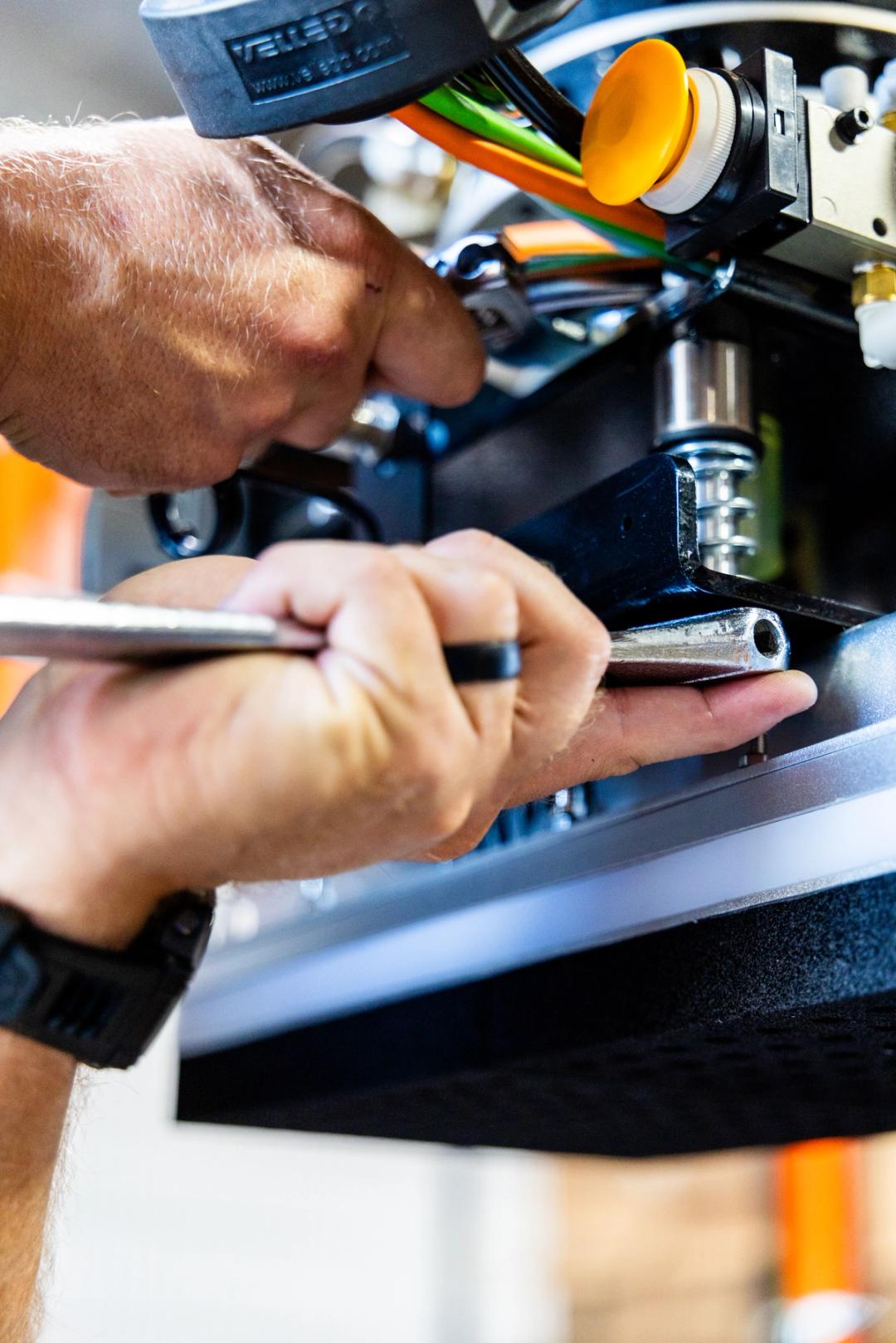
The most common concern we hear is about downtime during installation. In most cases, installation is scoped around your existing schedule. We aim to complete physical installation over a weekend or a short planned window so your line is back up Monday morning. If your facility runs 24/7, we work with you to identify the lowest-impact window and plan around it.
Once the system is live, we don't walk away. Our team monitors performance remotely, and if something isn't running right, it's on us to fix it, not on your team to diagnose it.
What Robots-as-a-Service Costs (and What It Doesn’t)
One of the most common questions manufacturers ask about robotic automation is: what does it actually cost? With a traditional capital purchase, the answer involves CapEx budgets, depreciation schedules, maintenance staffing, and engineering overhead. With Robots-as-a-Service, the answer is simpler.
What you pay for:
Formic charges a flat monthly rate based on your application, throughput requirements, and system complexity. There are no surprise invoices for maintenance, no fees when the system needs to be reconfigured for a new SKU, and no bill when a part fails and needs to be replaced. The monthly rate covers all of it.
What you don't pay for:
- Capital expenditure: The equipment never appears on your balance sheet.
- Internal engineering: Formic's team handles system design, installation, and ongoing maintenance.
- Repair and replacement cost: If something breaks, it's Formic's problem to fix, not yours to fund.
- Downtime penalties: Our contracted uptime means we're financially incentivized to keep your system running.
What this means in practice:
For most CPG manufacturers, the monthly rate for a Formic system is comparable to or less than the fully loaded cost of one or two headcount in the roles being automated. When you factor in turnover, retraining, workers' comp exposure, and the productivity losses that come with an inconsistent manual line, the math tends to shift quickly.
RaaS doesn't require a capital budget. It requires an operating budget, which means more manufacturers can move faster, without waiting for the next budget cycle.
Automation Isn’t a Question of “If,” It’s “When”
Robotic automation for CPG end-of-line packing is no longer a question of if. For most manufacturers dealing with chronic turnover, rising injury rates, and inconsistent throughput, it's a question of which model fits and how fast you can move.
The manufacturers getting ahead of this aren't waiting for the perfect budget cycle or the perfect moment. They're starting at the end of the line, locking in a partner who's accountable for performance, and scaling from there.
If you're ready to see what automation looks like for your specific line, talk to a Formic automation specialist about your line here.