How to Stop Hiring for Roles on Your CPG Floor
If you talk to almost any manufacturer today about what keeps them up at night on their production line, one of the first things that comes to mind is probably filling in labor gaps. The constant hiring, training, turnover, hiring, retraining, turnover merry-go-round is a nightmare situation for any production line manager. But it’s very common.
The real cost of a labor shortage isn't just recruiting spend, it's the lost productivity and output gap left behind. It's a constant game of catch-up that requires temporary labor coverage, overtime pay, or a lost shift.
The fix isn't a better hiring process. It's fewer roles that need to be filled over and over, through automation that's consistent and reliable. The first step on that journey is understanding where to start, and why certain roles keep turning over in the first place.
Why Palletizing and Case Packing Roles Keep Turning Over
Processes at your end-of-line, like palletizing and case packing, are often the tasks that turn over the most. Among our customers, we hear the same things again and again.
Alta Foods on being on the turnover treadmill: “With automating, it didn’t even come down to the cost of those employees palletizing. It’s that those 12 palletizing jobs are getting turned over four times a year, which is 60 people. We take 120 applications to hire 60 to 100 people. We drug test 60 people. We onboard 60 people. We train 60 people. What is the cost of not those 12 people, but those 60 people every year?” — Alta Foods
The Packing Lead at Masters Gallery Foods on the pain of palletizing: “It was hard with 40-pound boxes that you were lifting and bending all the way down to put them on the floor, and doing it again and again. It’s an eight-hour shift, at the end of the day, your back hurts a lot. You could barely sit down or get up.” — Masters Gallery Foods
And from Cameron’s Coffee, who emphasizes that palletizing isn’t a job built for people: "Palletizing is not designed for humans. There's a lot of ergonomic risk of palletizing. It's not a job that humans should do eight hours a day. Why not automate that? Have those humans go use their brain power elsewhere.” — Cameron’s Coffee
These are manufacturers who felt the pain (literally, for one) of losing valuable line employees to the constant bending, lifting, and twisting required at the end of line. A short tenure means manufacturers are always mid-training, and never at full capacity.
In the longrun, this hurts productivity and makes it impossible to say “yes” to new business due to capacity limitations.
Signs You’re Stuck on the Hiring Merry-Go-Round
If any of these sound familiar from the last year, hiring isn't the real problem. Staffing an unstaffable role is:
- More than 30% turnover in packing and stacking positions
- Temp agencies on speed dial just to keep the line covered
- Job postings sitting open for weeks with no qualified applicants
- New hires who quit within the first 90 days
- Plant managers spending more hours recruiting than running production
- Overtime and forced shifts to cover vacancies
- Training costs that reset every few months as staff turns over
Two or more of these, and the pattern is clear: it's not the recruiting process, it's the job itself. The roles hardest to fill are almost always the roles best suited for automation.
Hiring, Turnover, Training, Rehiring Is a Temporary Fix
Instead of going with a short-term solution to close gaps on the line, there’s a longterm fix that solves the gap for good, while also taking the ergonomic strain off your employees.
It’s automating.
The End-of-Line Roles to Automate First
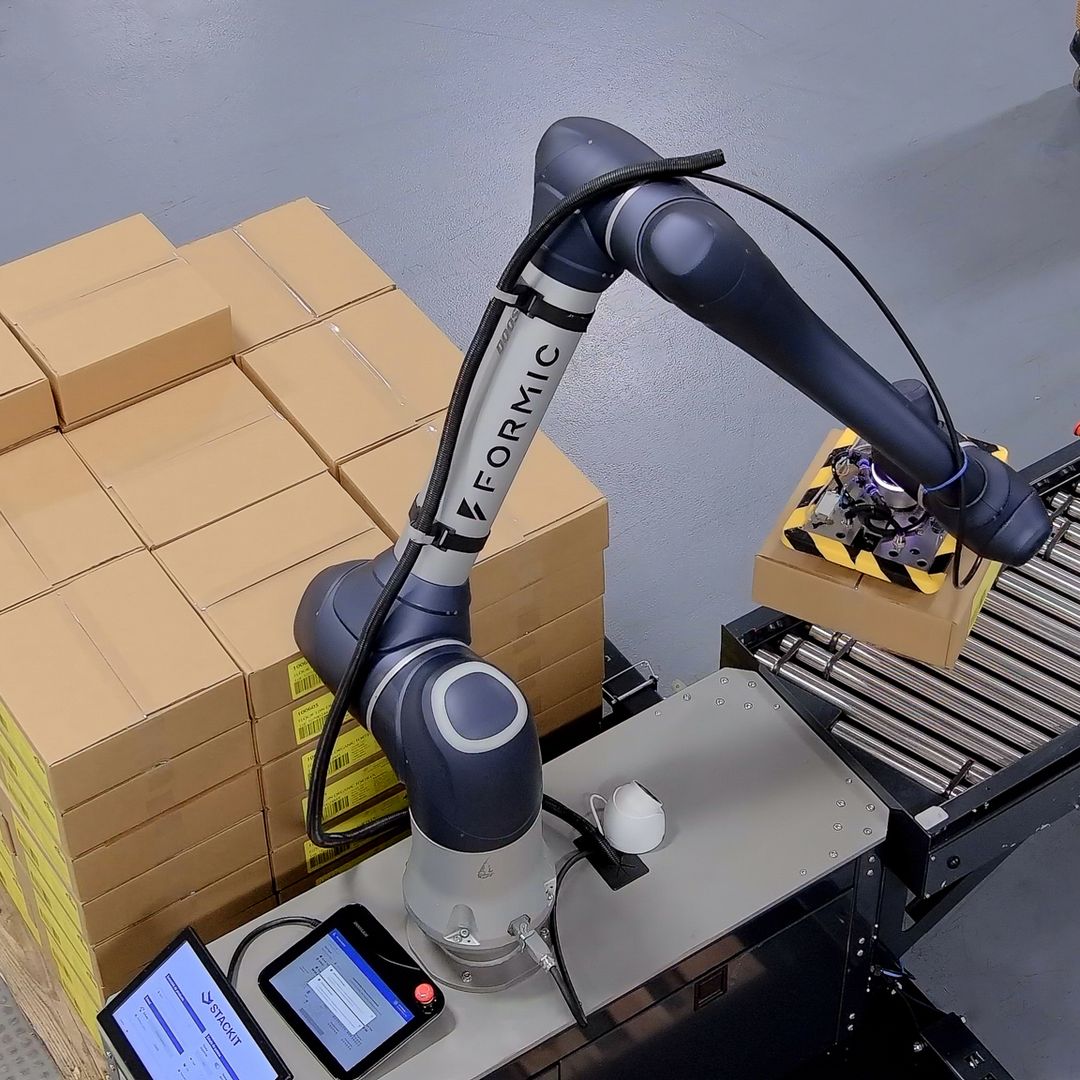
As the highest-turnover and highest-injury tasks, palletizing, case packing, and pallet wrapping are the fastest automation wins. Fortunately, these are also the easiest entry points for automation, since they're repeatable and well-defined.
We covered the three primary automation options and what's best for your operation in How to Rent a Robot for CPG End-of-Line Packing," our full breakdown of DIY, traditional integration, and Robots-as-a-Service (RaaS).
If you’re a manufacturer with massive available capital and an internal engineering and maintanence team, owning an automation system yourself is a fast way to deliver quick productivity wins. But for the 98% of businesses in the U.S. that are considered SMBs, traditional automation has often felt out of reach.
That's where Robots-as-a-Service (RaaS), or Full Service Automation, comes in. Instead of owning the system and maintenance internally, Full Service Automation providers like Formic are contracted to own and deliver on the uptime of the system.
This includes a 24/7 technical support, 100% contracted and preventative maintenance, team training, and real-time production data insights, all for no capital investment and a flat monthly rate.
Instead of worrying about whether your employees will show up for your second or third shift, you have a system that can run around the clock without feeling the strain of the bending, lifting, and twisting required to do the job.
What Automating Your End-of-Line Will Change for Your Floor
Once the roles causing the most turnover stop being roles a person has to fill, the whole floor operates differently. Here's what actually shifts, backed by what we've seen on real production lines:
- Headcount need shifts from repetitive labor to oversight and higher-skill work. The people who used to lift and stack all day move into roles running the system, checking quality, and handling exceptions.
- Turnover drops because the roles left are less physically punishing. When the job stops asking for eight hours of bending and lifting, it stops burning through people every few months.
- Hiring becomes proactive instead of reactive. Plant managers plan headcount around growth, not around who quit this week.
And the numbers back it up:
- Output climbs without adding shifts. Wyandot Snacks went from roughly 300,000 pounds of product a week to over a million after automating palletizing, hitting 98% uptime and eliminating temp labor entirely.
- Throughput gains show up fast, even on smaller lines. Kari-Out automated palletizing without any capital outlay and saw a 25% increase in output.
- Both results came within the first year, on facilities of very different sizes, which is the point.
The math holds up for SMBs, not just large plants. Full Service models remove the capital barrier that used to make automation a large-manufacturer-only option, which is why both a 90-year-old regional snack company and a mid-size case packer saw results within their first year.
If you're ready to see what automation looks like for your specific line, talk to a Formic automation specialist about your line here.