Buying a Used Industrial Robot: Real Costs, Hidden Risks, and a Better Alternative
We talk to manufacturers every day who have thought about automation for years but haven't made the jump because of the risk. High upfront costs, a lack of internal expertise to keep a system running, and the fear of outgrowing it often hold them back.
"This one piece of equipment is almost the cost of two of our entire lines," a liquid manufacturer told us.
One avenue they often explore is buying a used robot to limit that risk, because less money down feels like less to lose. But a used robot lowers the price of the arm, not the risk that comes with automating on your own.
Why Manufacturers Consider Used Robots
One of the biggest barriers to automation is capital risk. Budgets are tight, and no one wants to spend them on a project that might not pan out. Even when the money is there, automation projects often sit in a capex approval queue for months.
Many of the manufacturers we work with are automating for the first time, so robotics is unproven in their plant. A used robot feels like a safer pilot because the downside feels smaller. If it doesn't work out, they've spent less and can try to resell it.
It's not a bad instinct. But what most manufacturers overlook is that the robot isn't the risky part. Owning the outcome is.
What a Used Robot Actually Saves
Used robots typically sell for 40% to 60% of the price of a new one, which saves about 10% to 20% on the full robot cell. That's because the arm is only 25% to 35% of total cell cost. The real spend is in tooling, safety, conveyors, integration, and installation, and none of it gets cheaper when the robot is used.
Here's how the math plays out:
- New arm: $60,000
- Rest of the cell: $140,000
- Total with a new arm: $200,000
- Total with a used arm at 50% of new: $170,000
That's 15% saved, but the manufacturer keeps 100% of the risk. And integration labor alone, billed at $100 to $200 per hour across 150 to 400 hours per cell, can run $15,000 to $80,000.
That cost stays the same with a used robot, and it can climb if older software needs rework.
The Hidden Costs and Risks of Buying a Used Robot
Saving 15% looks good on paper, but it comes with risk and spend that don't show up on the purchase order. When you buy anything used, its history and remaining lifespan aren't always clear.
- Unknown wear and service history. Reducers, servos, and cables wear with every cycle. Without complete maintenance records, there's no way to know how much life the robot has left.
- Limited or no warranty. Used robots often come without one, and an extended warranty may not be available. When it fails, the repair bill is yours.
- OEM re-licensing fees. Some OEMs require a used robot to be registered to the new owner before they'll provide support or parts. For FANUC, that means a software re-burn fee.
- Aging controllers and scarce spare parts. Older controllers can be harder to connect to modern equipment, and parts get harder to find over time. A hard-to-source board can turn a quick fix into weeks of downtime.
- Full ownership of integration and uptime. You still own the cell design, the programming, and every 2 a.m. or 5 p.m. fault.
That's exactly why we advise manufacturers to look at total cost of ownership, not just the purchase price or ROI. It paints a much fuller picture of what you'll spend over time.
Buying a Used Robot vs. Robots-as-a-Service
One of the biggest risks of automation is downtime. When the system is down, everything is down. No boxes are packed or stacked, and customer orders don't get out the door on time. That's where a model like Robots-as-a-Service (RaaS) comes in.
With full service and maintenance built into the contract, responsibility for the system's uptime and output sits with the provider. The manufacturer can focus on what they do best: making product and getting it out the door on time.
Here's how the two options compare:
- Buying a used robot lowers the price of the arm, but the full cell still costs about 80% to 90% of what it would with a new robot, all paid upfront as capex. Beyond that, costs are unpredictable, since repairs, spare parts, and service calls are billed as they come up. The manufacturer owns all of the integration risk, and if the cell doesn't hit rate, the fix is on them. Warranty coverage is often limited or unavailable. Maintenance, spare parts, and support fall entirely on the plant team, with no one accountable for performance but the manufacturer. The equipment is already aging on day one, and upgrading means buying more hardware. Buying used works best for manufacturers with in-house robotics engineers, a well-supported robot model, and an application they've automated before.
- Robots-as-a-Service requires no upfront capital at all. Manufacturers pay one flat monthly rate that covers the robotic system, integration, programming, and maintenance, so there are no surprise repair invoices. The provider owns the integration risk and the equipment. With Formic, that includes 24/7 technical support, 100% preventive and corrective maintenance, and contracted uptime written into the agreement, with Formic averaging +98% uptime. Systems can be reprogrammed, reconfigured, or swapped as SKUs and production needs change, so the equipment never becomes obsolete. And because the provider handles everything, no in-house robotics expertise is required. RaaS is built for small and mid-sized manufacturers who want automation running in 8 to 12 weeks without capex, integration risk, or maintenance overhead.
For a full breakdown of how renting, leasing, buying, and RaaS stack up, see our robot rental vs. leasing comparison.
When a Used Robot Makes Sense
There is a time and place for buying used robots. If your needs fit neatly here, then it might be right for you:
- In-house robotics or controls engineers
- A current, well-supported OEM model
- An application the team has automated before
- Redeploying a robot the company already owns
- Budget to absorb a major repair without a warranty
How Full Service Automation Removes the Risk
For manufacturers drawn to buying used for low capital and a capped downside, Robots-as-a-Service delivers both, without the risk being on the plant.
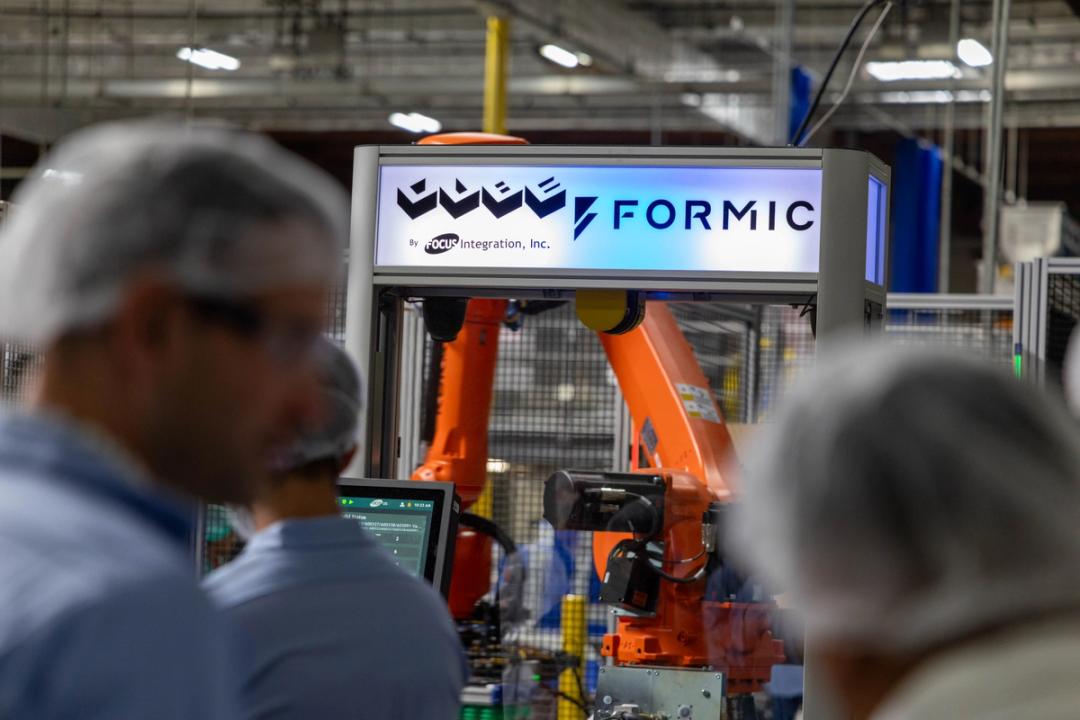
Formic's Full Service Automation model delivers end-of-line automation for $0 in capital at one fixed monthly rate. No in-house robotics expertise is needed, because Formic handles scoping, deployment, 100% of maintenance, and 24/7 support. Formic averages 98% uptime, and that uptime is written into the contract. If the system isn't running, it's on us to fix it, not on your team. That fixed rate is often comparable to the fully loaded cost of the roles being automated.
It's also faster: a traditional capital project takes 60 weeks or more from first conversation to running production. With Formic, deployment takes 8 to 12 weeks.
Buying used also locks you into the equipment you bought. If production grows or changes, that robot may not keep up, and you're back to square one. With Full Service Automation, equipment swaps are included, so the system can grow with your line.
When one of our pizza customers landed orders from two major retailers that tripled its required capacity, the team realized its Formic cobot wouldn't keep up. Because they weren't locked into an equipment purchase, they upgraded to an industrial system that was deployed in days instead of months.
As Cameron's Coffee put it, "Formic removes all the anxiety of a traditional equipment purchase. We like that they provide the entire solution, including committed uptime and service."
Questions to Ask Before Buying a Used Robot
If you decide to go the used robot route, be sure to get as many of these questions answered as possible to ensure the best possibility of continued success:
- What are the hours and maintenance records?
- Does the OEM still support this controller?
- What do re-licensing and software fees cost?
- Is any warranty available?
- What's the full integration quote for the cell?
- Who services it after go-live, and how fast?
- What's the five-year cost compared to a fixed monthly rate?
FAQ: Buying a Used Robot vs. Robots-as-a-Service
- How much does a used industrial robot cost? A used industrial robot typically sells for 40% to 60% of the price of a new one. But the arm is only 25% to 35% of a complete robot cell, so the full project usually costs just 10% to 20% less than a cell built around a new robot.
- Is it worth buying a used palletizing robot? It can be for plants with in-house robotics engineers and a well-supported robot model. For most small and mid-sized manufacturers, the integration, safety, conveyor, and maintenance costs outweigh the savings on the arm. Used palletizing robots are also hard to find.
- What are the risks of buying a used robot? The biggest risks are unknown wear, limited or no warranty, OEM re-licensing fees, aging controllers, and scarce spare parts. The buyer also owns all of the integration, maintenance, and uptime, with no one else accountable if the system underperforms.
- Is Robots-as-a-Service cheaper than buying a used robot? RaaS requires no upfront capital, while a used robot cell still costs 80% to 90% of a new one. With Formic, one fixed monthly rate covers the system, integration, maintenance, and 24/7 support, so there are no surprise repair bills or spare-parts costs.
- Do I need in-house robotics expertise to run a used robot? Yes. Someone on your team has to integrate, program, troubleshoot, and maintain it, or you'll pay an outside integrator to. Robots-as-a-Service is built for manufacturers without dedicated robotics staff, since the provider handles all of it.
Lower the Risk, Not Just the Price
Buying a used robot comes from the right instinct: automate without betting the business on it. But the robot was never the risky part - integration, uptime, and maintenance are, and a used robot leaves all of them with your team.
Full Service Automation takes that risk off your plate, with $0 in capital, one fixed monthly rate, and performance written into the contract.
See what that looks like on your line with a free on-site automation assessment.